


For those fascinated by the art and precision of watchmaking, the split second chronograph is one of the most intriguing complications. Also known as a rattrapante, this feature allows you to time multiple events simultaneously. Perfect for when you want to measure two or more intervals within a single race or event.
While it might sound technical, the magic of the split second chronograph lies in its ability to track split times with precision. Essentially, you’re getting a stopwatch with an extra layer of functionality that allows you to measure two times at once without resetting. It’s a feature found in some of the most high-end watches and it’s prized for both its complexity and its practicality.
In this guide, we’ll break down how a split second chronograph works, why it’s a sought-after feature among watch enthusiasts and what makes it a standout in the world of fine watchmaking.
Let’s start with understanding more about split choreograph and then we will move on to the mechanics and history behind this marvel of horological engineering!
What is a Split-Second Chronograph?
A split-second chronograph is a watch complication designed for precision timing. Unlike a standard chronograph which simply tracks elapsed time, a split-second chronograph features two stopwatch seconds hands.
One hand can be stopped to record an intermediate time, while the other continues moving, allowing you to time two events at once. Users can also, after the recording, let the stopped hand run again with the moving seconds hand, repeat measuring another intermediate time, hence continuing to measure a chain of sequential events without a pause or hiccup.
This makes it an invaluable tool in scenarios like racing, where you might want to track individual laps or multiple competitors simultaneously.
What sets it apart from other chronographs is: A regular chronograph only measures one event at a time, and while a flyback chronograph lets you reset and restart instantly, but only the split-second chronograph gives you the flexibility to pause and resume timing on the fly. It's a feature prized by watch collectors and enthusiasts alike for its mechanical complexity and practical use in competitive sports.
How Does a Split Second Chronograph Work?
When you start the chronograph by pressing the primary pusher, both seconds hands begin moving in unison. However, the magic happens when you engage the split-second function using a second pusher. This action stops one of the hands (the "split-second" or rattrapante hand) while the other continues to track the ongoing event.
This allows you to record an intermediate time (for example, the time of one lap in a race), without halting the overall measurement. A third press of the split-second pusher makes the stopped hand quickly catch up to the running hand, perfectly resynchronizing them.
To give a practical example: imagine you're timing multiple cars in a race. You start the chronograph at the beginning of the race, and as the first car completes a lap, you press the split-second pusher to stop one hand, recording that time. Meanwhile, the other hand continues tracking the overall race. After noting the split time, you press the pusher again, allowing the hands to realign and continue in sync.
This complication is highly prized for its complexity, as it requires an additional clutch and gear system to control the split-second hand independently. It’s a true marvel of watchmaking engineering, typically found in high-end timepieces.
Early History: From Practical to Prestigious
The early split-seconds chronographs were designed to track simultaneous events with remarkable precision. In 1844, Adolphe Nicole laid the groundwork for modern chronographs by developing a split-seconds feature that got granted patent No.10,348, which included innovations such as the heart-shaped cam and the flyback mechanism, still used in split-seconds chronographs today to reset the seconds hand with a push of a button.
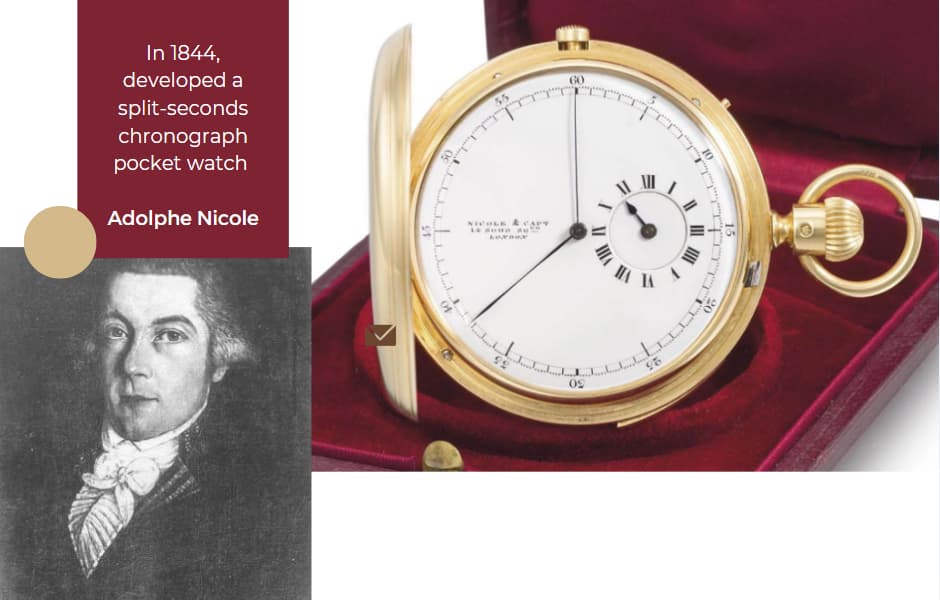
Initially, these watches weren’t luxury items but practical tools used by scientists and race officials. By the time Patek Philippe introduced its first split-seconds chronograph in 1923, the design had evolved into something far more refined that set the stage for what would become an iconic complication in the world of horology.
Let’s find out how.
Patek Philippe: Pioneering Innovations in Split-Second Chronographs
Patek Philippe’s 1923 debut of the double chronograph set a new benchmark in watchmaking. This was not merely about function but about showcasing the full potential of precision and artistry. A prime example is the 1923 Officer watch no. 124,824, the earliest known split-seconds wrist chronograph. This timepiece sold for nearly $3 million in 2014 to the Patek Philippe Museum.

Patek’s later rattrapante models—like the reference 1436, launched in 1938—were seen as the pinnacle of this craft and exemplified this with its use as a versatile tool for timing races and scientific experiments. Predominantly crafted in yellow gold, with fewer than nine pink gold versions known, its rarity and the meticulously finished caliber 13 130 CCR by Victorian Piguet, have elevated this model to mythical status.
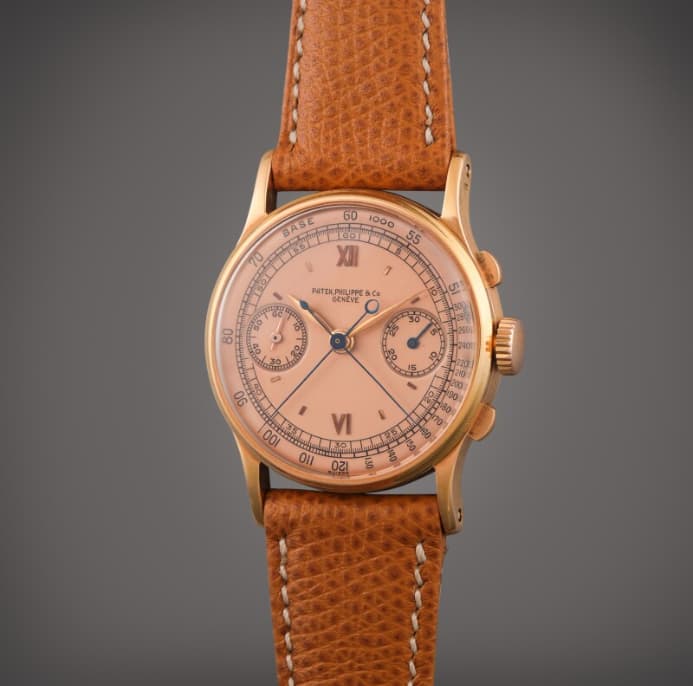
(Patek Philippe Reference 1436 Launched in 1938)
One of Patek’s most iconic split-seconds watches is the reference 5959, introduced in 2005. This model, featuring an in-house manual-wind chronograph caliber CHR 27-525 PS, is the thinnest of its kind ever made. At just 5.25mm thick, the movement underscores Patek's ability to push technical boundaries while maintaining classic aesthetics. The 5959 was a breakthrough not just for its dimensions, but also for its integration of modern innovations within a time-honored complication, therefore Patek Philippe only produced 10 watches per year.
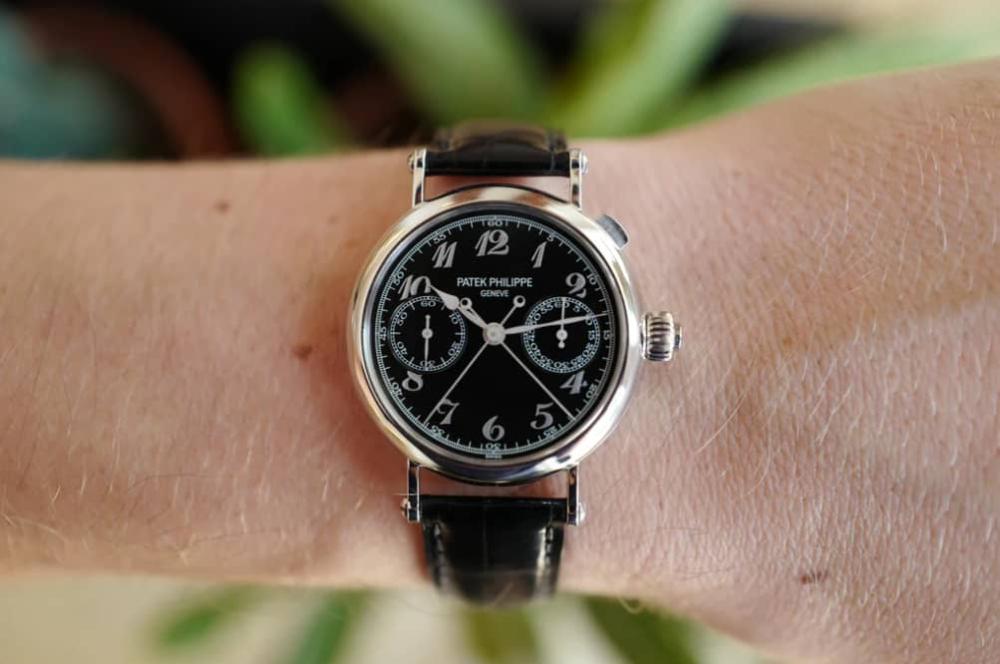
( Patek Philippe Reference 5959 Introduced in 2005)
Another highlight is the reference 5370P, a platinum-cased masterpiece launched in 2015. This split-seconds chronograph features a black enamel dial and the highly sophisticated caliber CHR 29-535 PS. It exemplifies Patek Philippe’s meticulous attention to both movement performance and timeless design. The chronograph's dual-register layout and hand-finished details ensure that it appeals to the serious collector who values technical brilliance as much as visual refinement.
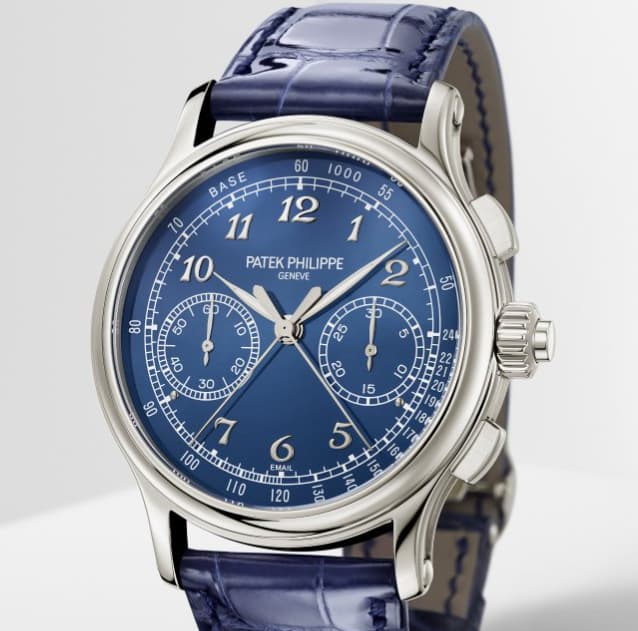
( Patek Philippe Reference 5370P Launched in 2015)
Milestones in Watchmaking: Beyond Patek
While Patek Philippe remains a dominant figure in the history of split-seconds chronographs, other brands have also made significant contributions. IWC's Doppelchronograph Ref. 3713, introduced in 1992, is one such example.
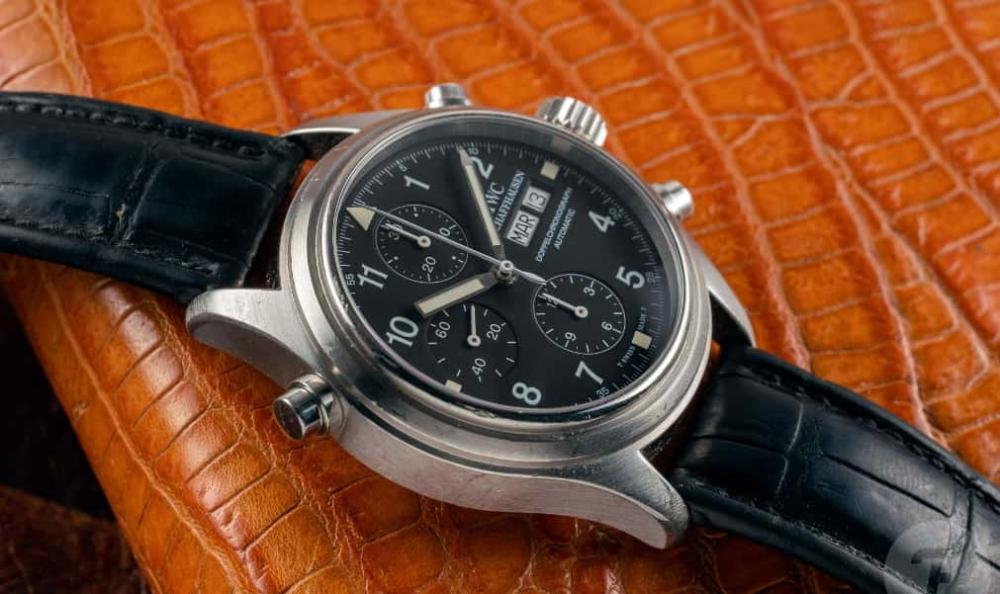
( IWC's Doppelchronograph Ref. 3713)
Designed by Richard Habring, this model made the split-second complication more accessible while retaining a high level of craftsmanship.
(IWC's Doppelchronograph Ref. 3713, Introduced in 1992)
Another major player is Gallet. In 2010, Gallet introduced the caliber G330, the first self-winding double chronograph movement powered by two mainsprings. This innovation resolved the long-standing issue of decreased accuracy in dual recording that provides 72 hours of power while maintaining chronometer-level precision across all functions.
Manual vs Automatic Movements: Breaking Down the Differences in Split-Second Chronographs
Manual Movements: A manually wound split-second chronograph requires the wearer to regularly wind the watch by turning the crown. This action provides power to the mainspring that allows the watch to function.
Automatic Movements: An automatic split-second chronograph, on the other hand, relies on a rotor that winds the mainspring through the natural motion of the wearer’s wrist. This is convenient, as it eliminates the need for regular winding. Read more about the automatic movements from here.
In-House vs Third-Party Movements
In-house movements are designed and manufactured entirely by the watchmaker which allows brands like Patek Philippe and A. Lange & Söhne to control every detail of the mechanism.
For example, Patek’s Caliber CHR 29-535 PS features a traditional column wheel and horizontal clutch, while A. Lange & Söhne's Caliber L001.1 is known for split-second chronographs crafted with precise engineering and aesthetic finesse. These movements offer exclusivity and advanced craftsmanship that’s what makes their watches truly special by combining rarity, precision, and technical excellence.
In contrast, third-party movements like the ETA-Valjoux 7750 are widely used across brands and it offers reliable performance at a more accessible price point. While they lack the prestige of in-house calibers which provide easier maintenance which makes them a popular choice for many watchmakers.
Conclusion: The Perfect Fusion of Art and Science
A split-second chronograph masterfully unites the precision of engineering with the elegance of design. Its ability to track dual events simultaneously highlights the complexity behind its seemingly simple function. These watches offer a blend of craftsmanship and ingenuity in every movement. Whether you're a collector or enthusiast, it's hard not to appreciate the artistry within these pieces.
Curious where to find one? Of course, the best option is from an authorized store so that you can get both value for your money and the authenticity of this extraordinary timepiece.
Explore Split Second Chronograph Timepieces On Jewels By Love
Jewels By Love, with a legacy dating back to the 1800s, stands as an iconic name in luxury watches and fine jewelry. Authorized dealers of the world’s most prestigious brands—Patek Philippe, Cartier, Breguet, A. Lange & Söhne, and Nomos—Jewels By Love offers unparalleled access to some of the finest split-second chronographs available today. With over 850 years of combined horological excellence in their curated collection, we provide knowledgeable assistance to help you discover the perfect piece. Contact us to learn more about our prestigious collection.