

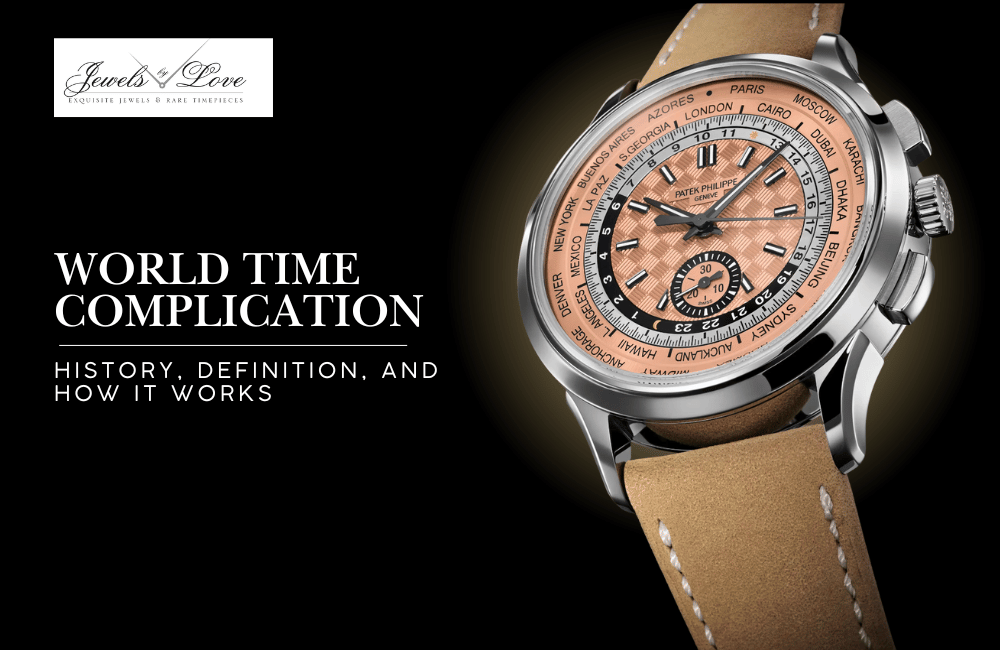
There’s a quiet confidence in wearing a watch that keeps track of forty cities at once. Not the kind that demands attention, but the kind that says I understand time differently.
The world time complication isn’t just about knowing whether it’s 9 a.m. in Geneva or midnight in Hong Kong. It’s a mechanical philosophy, a reminder that time doesn’t belong to one place. It moves, constantly, in layers.
Collectors love it because it feels like holding a tiny planet on your wrist. Engineers love it because it’s absurdly clever. And anyone who’s ever adjusted one knows it’s a piece of machinery that humbles even the most experienced hands.
In this blog, we’ll trace where this idea came from, how it evolved into one of watchmaking’s most admired complications, and what actually makes it tick beneath the dial.
History of the World Time Complication
Back in the 1800s, the world was literally falling out of sync. Railroads, telegraphs, steamships and they were all shrinking distance while clocks stayed local and inconsistent. That chaos triggered a need: a standard for time itself. In 1879, the Canadian engineer Sir Sandford Fleming proposed dividing the globe into 24 equal time-zones (one for each hour). Then, in 1884, the International Meridian Conference placed Greenwich at the prime meridian and pushed the concept of global time into reality.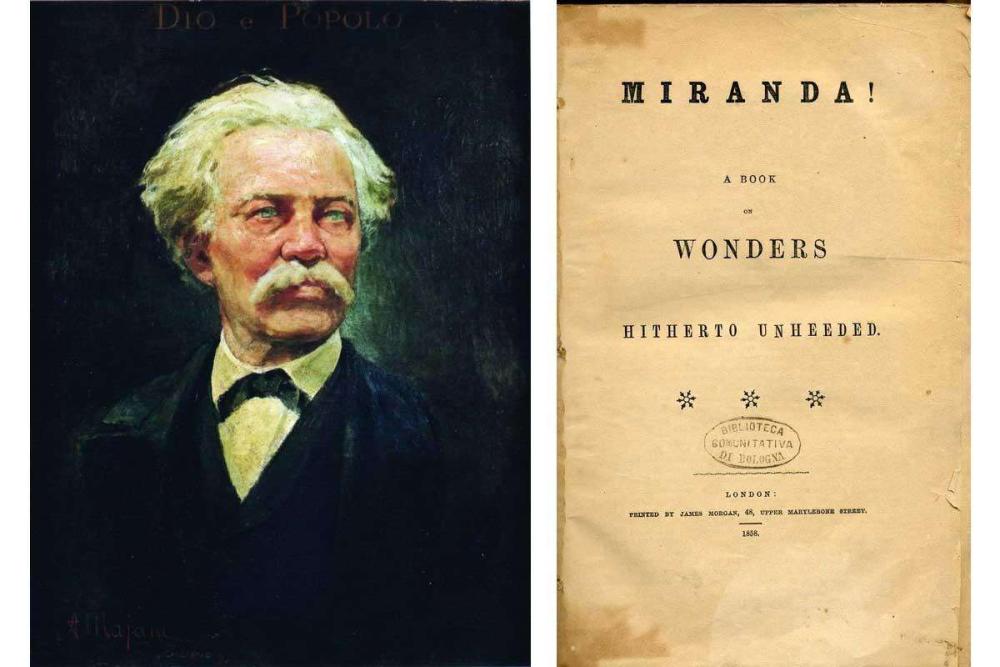
With the idea laid, the question became: how to carry that concept on your wrist? That challenge found its answer with Louis Cottier, a Swiss watchmaker born in Carouge in 1894. His father had experimented with multi-zone clocks, but the systems were clunky. Louis took the baton and in 1931 created what became the hallmark world time mechanism: a dial with local hour and minute hands, surrounded by a 24-hour ring rotating in sync, and an outer ring of city names representing each zone.

(Image Caption: Louis Cottier)
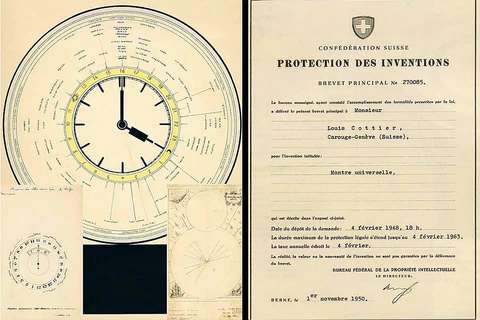
(Image Caption: Original drawing for the World Time Watch Created by Louis Cottier)
The first commercial uses followed soon after. For example:
✔️ Around 1936–1937, Cottier supplied a pocket world-time watch (ref. 605 HU) to Patek Philippe, marking some of the earliest serious examples.
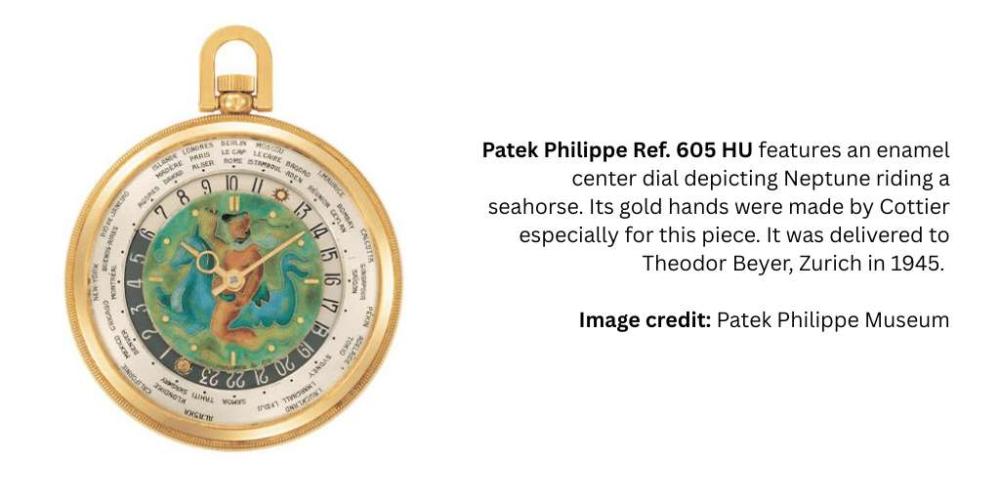
✔️ In 1937, wrist versions appeared: Patek references such as 96 HU and 515 HU used the Cottier system with 28-city rings and 24-hour discs.
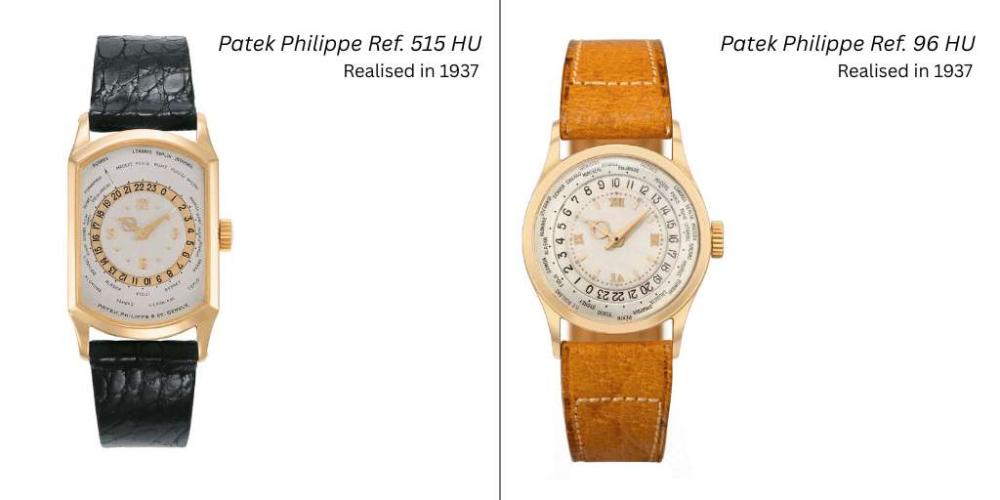
I✔️ In 1953 Cottier introduced a major convenience feature: a second crown (or pusher) dedicated to advancing the city ring independently, reducing the fuss for travellers. Patek’s ref. 2523 adopted this.
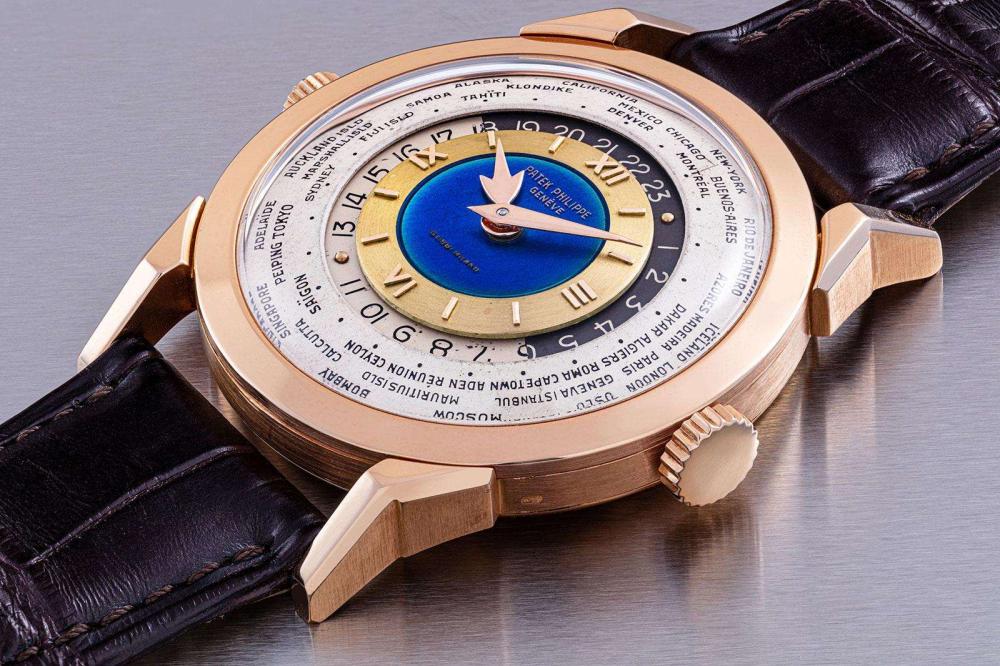
(Image Caption: Patek Philippe World Time Ref. 2523, 1953, image credit: Christies)
To deep dive in the history of Patek Philippe world time complication, read this blog.
In the 1950s, the complication matured. Cottier introduced refinements like a second crown to adjust the city ring independently, a convenience for travellers. Meanwhile, production remained limited and the complication stayed niche. Then came the disruption of the 1970s and 80s: the quartz crisis battered mechanical watchmaking, and world-time watches became rarer.
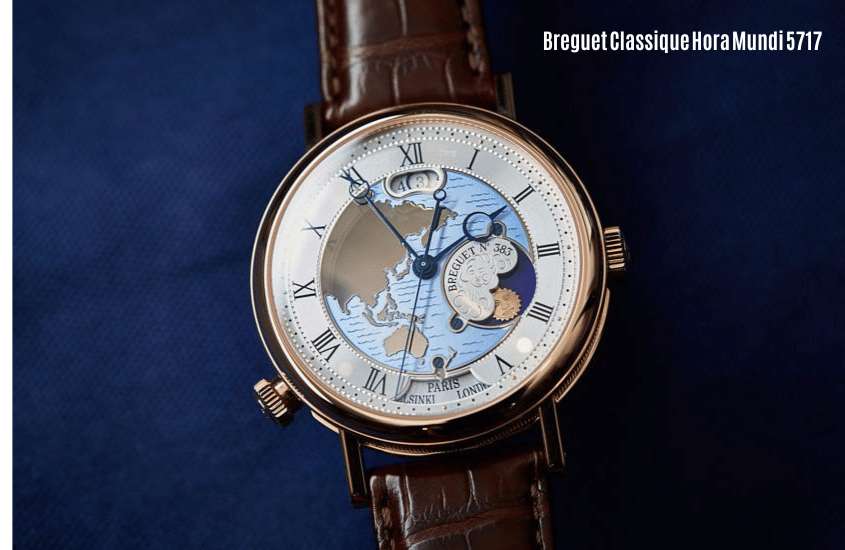
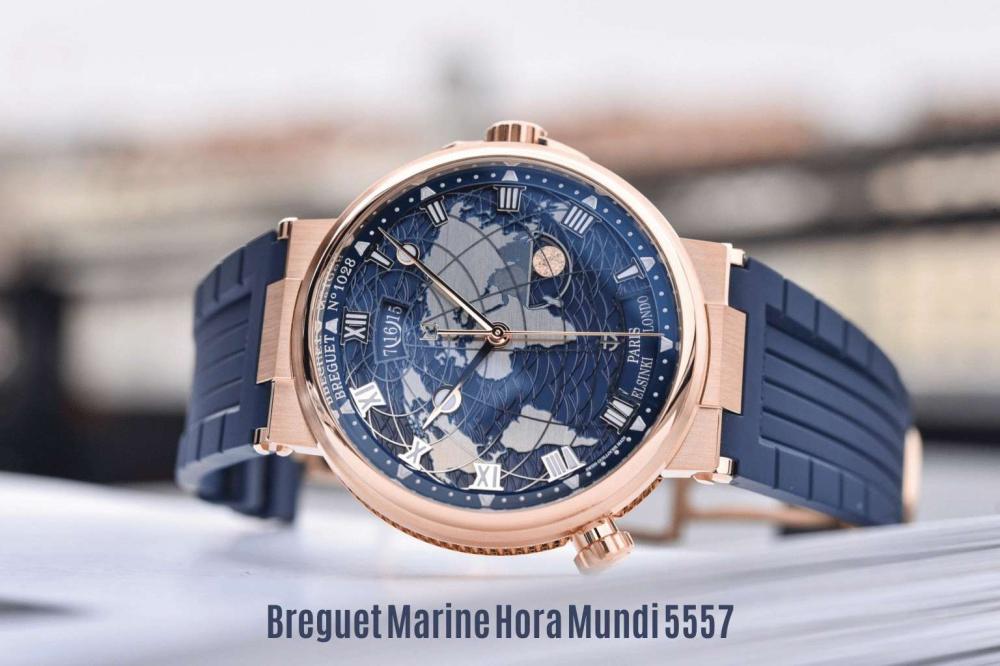
The revival started in the 1990s and accelerated in the 2000s. Brands revisited the concept with fresh interpretations. For example, Breguet iced the idea with its Breguet Classique Hora Mundi 5717 and later the Breguet Marine Hora Mundi 5557, watches that allow instant switching between preset time zones.
At the same time, A. Lange & Söhne introduced their A. Lange & Söhne Lange 1 Time Zone in 2005, complete with city ring and world-time style features.
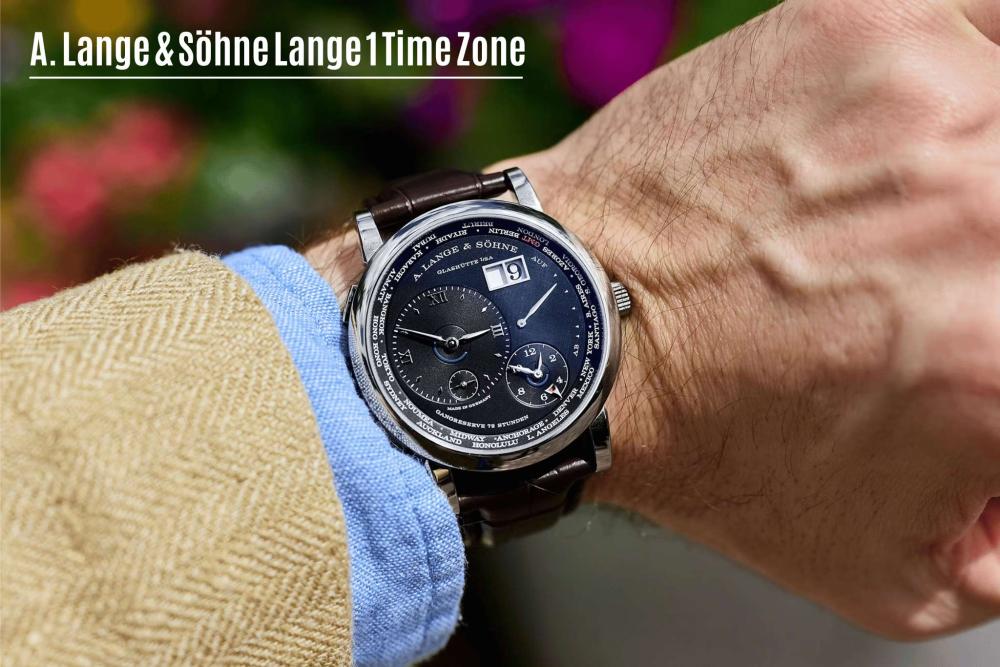
The complication now lives widely in luxury watchmaking, recognised not just as a novelty but as part of high-horology.
What Is a World Time Complication?
At its simplest: a world time watch is a timepiece that shows you the current hour in most of the world’s major time zones, all at once, on a single dial.
See how the world-time feature works, illustrated by the Patek Philippe Ref. 5531G-001 below.

✔️ Around the dial you’ll commonly find 24 city names (or codes) — one city representing each of the 24 major hourly time zones (for example: London for GMT±0, New York for GMT–5, Tokyo for GMT+9).
✔️ There’s also a 24-hour ring (or disc) which rotates once every day. That disc aligns with the city ring so that whichever city is at the top (usually 12 o’clock) is your local time signal. The hour and minute hands show your local time in the usual way.
✔️ Once set, the mechanism means you can glance at almost any city on the ring and read off the hour in that zone. The minutes stay the same everywhere, so you just check the number on the 24-hour ring aligned with that city name and read the minute hand. Cuts out the need to juggle multiple watches.
✔️ Many models include a day/night indicator (often via colour-coding on the 24-hour disc) so you can tell if it’s day or night in the listed city.
It’s important to recognise that this is different from a simpler GMT or dual-time watch. Those watches might show one or two additional time zones. A true world timer shows all time zones simultaneously, that's the distinction.
How to Use It:
Set your local city (for example “London”) so that it sits at the 12 o’clock position on the city ring.
The hour and minute hands show local time.
The 24-hour ring rotates so the number next to “London” aligns with your hand-read hour.
To find the time in “Tokyo”, just look at where “Tokyo” sits on the city ring and read the number on the 24-hour ring next to it. The minutes are shown by the minute hand (same for all zones).
If the number falls in the “night” half of the 24-hour ring, you know it’s nighttime in that zone; if it’s in the “day” half, it’s daytime there.
How Does a World Time Watch Work?
Inside a world-time watch, everything revolves around perfect coordination between three elements. The hour hand, the 24-hour ring, and the city ring. Together, they make it possible to read the time anywhere on Earth at once.
When you set your local city at the 12 o’clock position, the watch synchronizes the time shown by the central hands with that city’s time zone. Beneath the dial, a special gear system connects the hour wheel (which drives the hands) to the 24-hour disk. This disk makes one full rotation every 24 hours, mirroring the Earth’s rotation, and carries the day/night shading to show whether it’s AM or PM in each zone.
The city ring, marked with 24 reference cities, usually stays fixed once your local city is aligned at the top. The 24-hour disk, meanwhile, is constantly rotating in sync with the movement, ensuring every city always points to the correct local hour. If six hours pass in your city, every other city’s time on the ring advances by six hours too.
When you travel, a coupling mechanism allows the time to jump seamlessly to your new location. Pressing the pusher (usually at 10 o’clock) moves the city ring by one position and simultaneously shifts the hour hand and 24-hour disk forward or backward by exactly one hour. The minutes and seconds remain untouched, keeping the watch perfectly synchronized.
This “jump” system. First perfected by Louis Cottier and later refined by Patek Philippe is what makes world timers so elegant to use. With a few clicks, the watch recalibrates to the new time zone while every other city’s display adjusts automatically.
Underneath that smooth motion lies an intricate dance of gears, cams, and clutches. The movement must engage and disengage multiple parts precisely, so that each pusher press moves the correct components without disturbing the rest. That’s why world time complications remain among the most admired in watchmaking, mechanically complex, yet incredibly intuitive for the wearer.
Explore Notable References at Jewels by Love
Among the most fascinating world-time watches here are the two exceptional reference that highlight how beautifully function and design can coexist.
Patek Philippe 5330G World Time
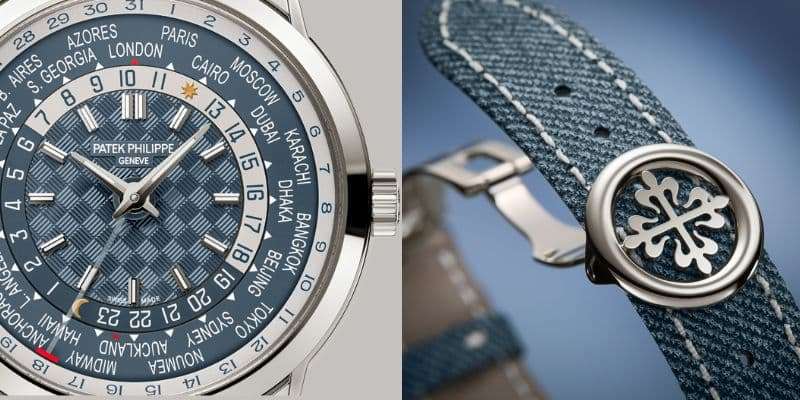
This remarkable timepiece is the first from Patek Philippe to feature a date display linked to local time, an innovation that elevates the century-old world-time mechanism. Its plum sunburst dial and refined white-gold case embody everything collectors admire about Patek technical brilliance wrapped in timeless style. You can explore the full story in our dedicated article on this reference.
Nomos Club Sport Neomatik Worldtimer “Night Navigation”
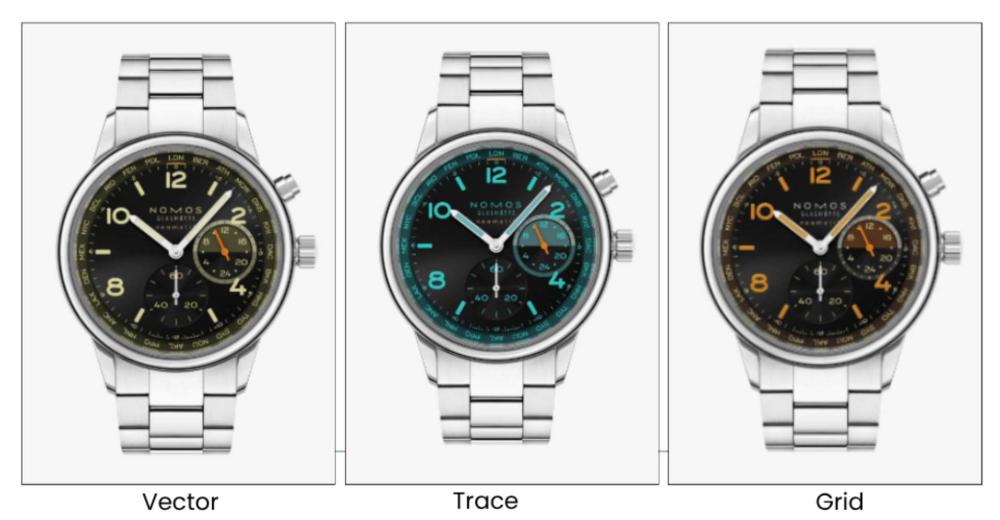
This modern interpretation from Nomos Glashütte makes world travel effortless. With a single push, the wearer can move between cities while keeping home time visible on the sub-dial. Its minimal blue dial and straightforward functionality capture the spirit of practical elegance. Learn more in our blog feature on this watch.
Explore World-Time Watches at Jewels by Love
When it comes to world-time watches, few places bring together heritage, craftsmanship and authorized luxury like Jewels by Love. With roots dating back to the 1800s and now in the 6th generation of family ownership, this house of fine watchmaking has earned official agent status from legends such as Patek Philippe, Cartier, Breguet and Nomos Glashütte , a privilege few jewellers worldwide hold.
For the traveller, the collector or the seeker of mechanical beauty, world-time watches represent so much more than dual or multiple time zones. They express a global view and a finely crafted mechanism all at once. At Jewels by Love, you’ll discover a curated collection of these world time piece marvels, each chosen for its precision, design and provenance.
Want to explore further? Browse the full world-time collection at Jewels by Love, and for any inquiry whether you’re interested in availability, pricing, servicing or provenance please reach out to our team. We’re here to help.