To answer this question, we need to answer what are the types of watches present? There are four main categories of watches. They are mechanical watches, quartz watches, digital watches, and smartwatches. When we talk about smartwatches, they are the latest technology and available everywhere as they can be easily manufactured. Digital and quartz watches work on the quartz crystal which makes them cost-effective. Now, let’s talk about mechanical watches. These are the watches that are being made for centuries; before the time of smartwatches & even before the time of quartz. The ideology of time-keeping evolved with mechanical watches. These watches work purely on the mechanical energy generated by the winding of the crown (turning the crown in the clockwise direction usually). The first such watch was made in the year 1505 by a locksmith named Peter Henlein. At that time, these watches used to lose time by half an hour. As time progressed, the watchmakers started making more accurate watches. These days mechanical watches have been reached to the accuracy that they do not lose time. These watches tell the story of timekeeping.
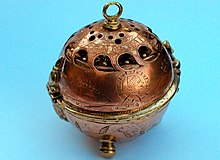
(First watch ever made)
As we now know, that mechanical watches are the ones which come in the precious category, let us see, what all goes into their making. These watches are made of precious metals and have intricate work done on their dials. Apart from the metals that they are made of, there are years of watchmaker work that go into making a watch accurate. And accuracy also means that, even on shaking, climate temperature variation exposure does not lead to time loss. The major factors affecting in making of these timepieces are:
Tools used in making the components of the watch
Components and metals used
Watch decoration and detailing
Assembling the components
Testing the watch accuracy
Tools used in making the components of the watch
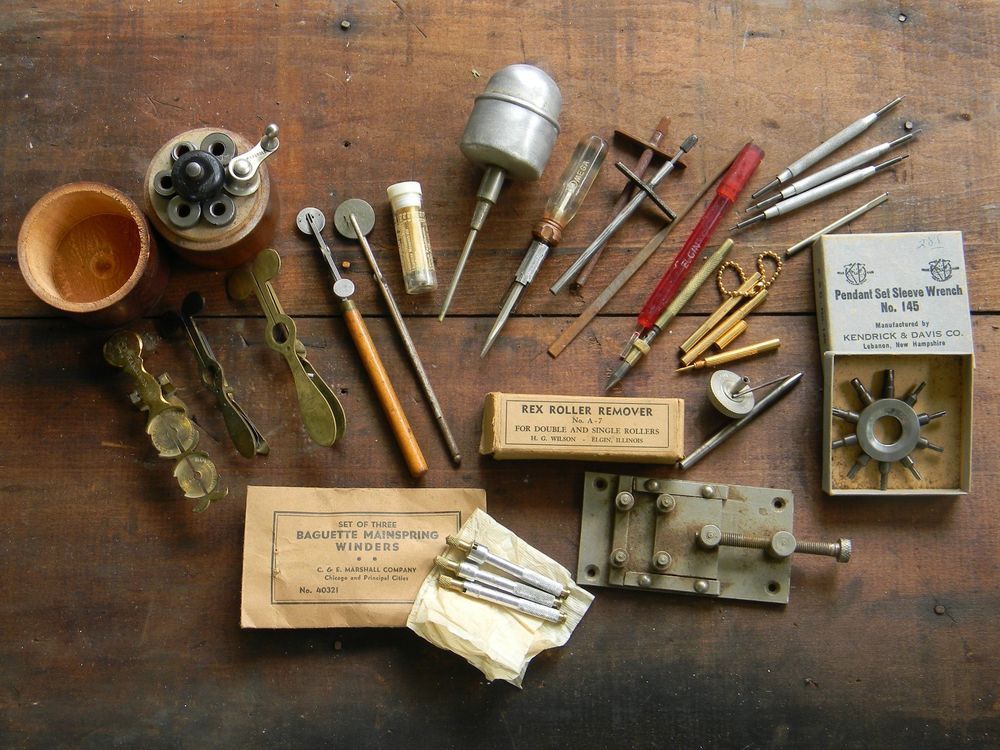
The tools used in watchmaking are the finest and the most accurate to meet the required precision. To work on them you need to magnify the view. Of course, there are standard watch-making tools, but to handle the metal properties used in the watch, they need special kind of tools. Some companies make their tools in-house, and some use the standard types of equipment. Some of the examples of tools used in watchmaking are screwdrivers, loupes, movement holders, tweezers, calipers, and many more. These tools are then used by the craftsmen to make and finish the components of the watch and give a rich look to them.
(Few tools used in watchmaking)
Components and metals used
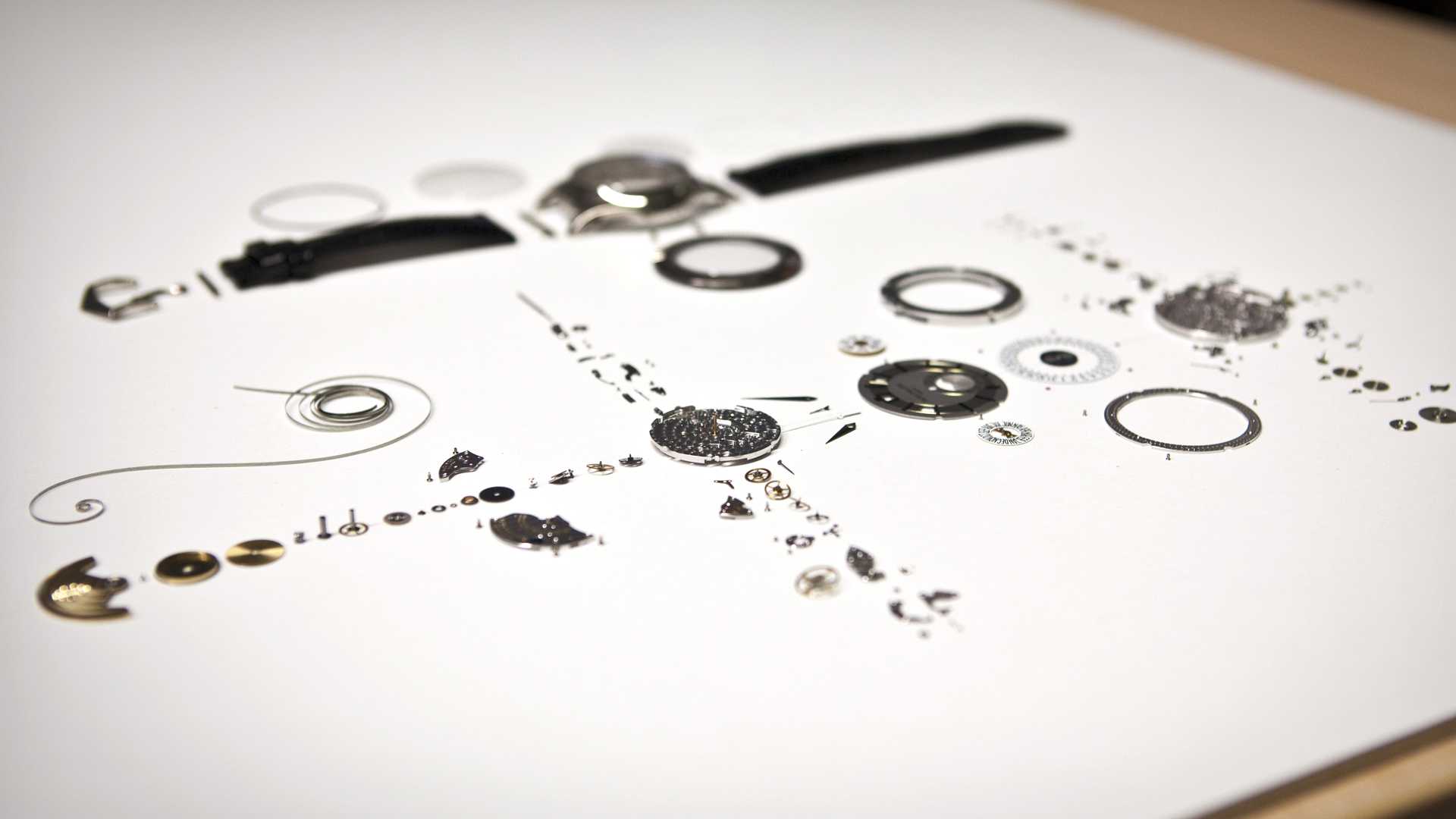
The wristwatch itself is a small object and the parts used in its making are even smaller. These tiny components of watches need the precession of microns. The metals used in watchmaking are various like gold, silver, titanium, brass, copper, steel, platinum, titanium, tungsten, and different kinds of alloys. Each metal has some benefits and challenges when they are used. The watchmakers have perfected their balance of it over the years by determining where to use which metal or which alloy.
(Components of a watch)
Watch decoration and detailing
You can see the most intricate work on these timepieces with beautiful detailings, from dials to their movements. There are various techniques to do aesthetic enhancements and engraving, they are chamfering, mirror polish, guilloché work, Geneva stripes, tapisserie, flinqué, straight graining, circular graining, and many more. These techniques are carried out by artists who are experts in their craft. Some of the engravings are performed by precision machinery and some are performed by hand.
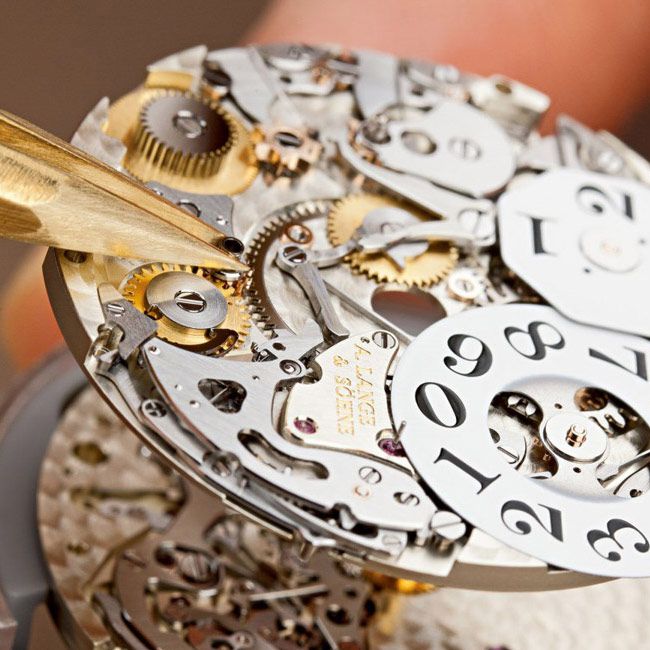
When the intricate components of the watch complete their creation process, they are then sent to the watchmaker for assembly. A simple mechanical watch without any complication has roughly 130 components and the most complicated watch has 2826 components. The watchmaker puts all the parts together piece by piece in their specific location to make a working watch. All the components need to have a precise size for them to fit together.
(Assembly of the watch)
Testing the watch accuracy
The timepieces after getting assembled are then sent for testing for 600h or more to see their accuracy in timekeeping. Once this is done then they are sent for the stress test simulations for the real-world scenarios. The different functionalities that they may have like the hand winding, automatic winding, different kinds of chronographs, etc are checked to certify them with the best quality. Any watch that fails the quality threshold doesn’t end up in salons.
(Watches being simulated for testing in real-world scenarios)
Conclusion
The work that goes into making mechanical watches is tremendous. These timepieces are nothing but a work of art. Each and every timepiece is handcrafted and hand-finished with the tiniest details that you cannot take your eyes off. Everything is perfectly set and organized with accuracy being the top priority. The watches which are milestones for the innovation of timekeeping have to be precious.