From the beginning of time, humans are trying to measure time, it’s a fascinating subject for humans. Humans started timekeeping when they started observing the moving objects in the sky. The timekeeping started with the Egyptian's sundials. The sundials used to tell the time in the daytime, but they need to measure time at night. This need made humans invent hourglass, water clocks, and candle clocks. These devices provided time at night, they were limited to their length. Even though these devices existed, the common person didn’t know the actual passing of time as we know it today. There were ways to tell time to people in the way of bells. The journey of time-telling by humans is a long one. Let’s take a look at the major time-telling techniques before the timekeeping revolution started. Some of the commonly practised technics for time-telling of early times are:
A sundial consists of two things a flat plate and a gnomon. The flat plate as a dial where there are different hour-lines and gnomon casts a shadow onto the dial. When the earth rotates, the sunlight cast shadow of gnomon on the dial telling what hour of the day it is. There are many types of sundials that are fixed axial gnomon sundials, movable-gnomon sundials, altitude-based sundials and many more
(A horizontal sundial)
Hourglass
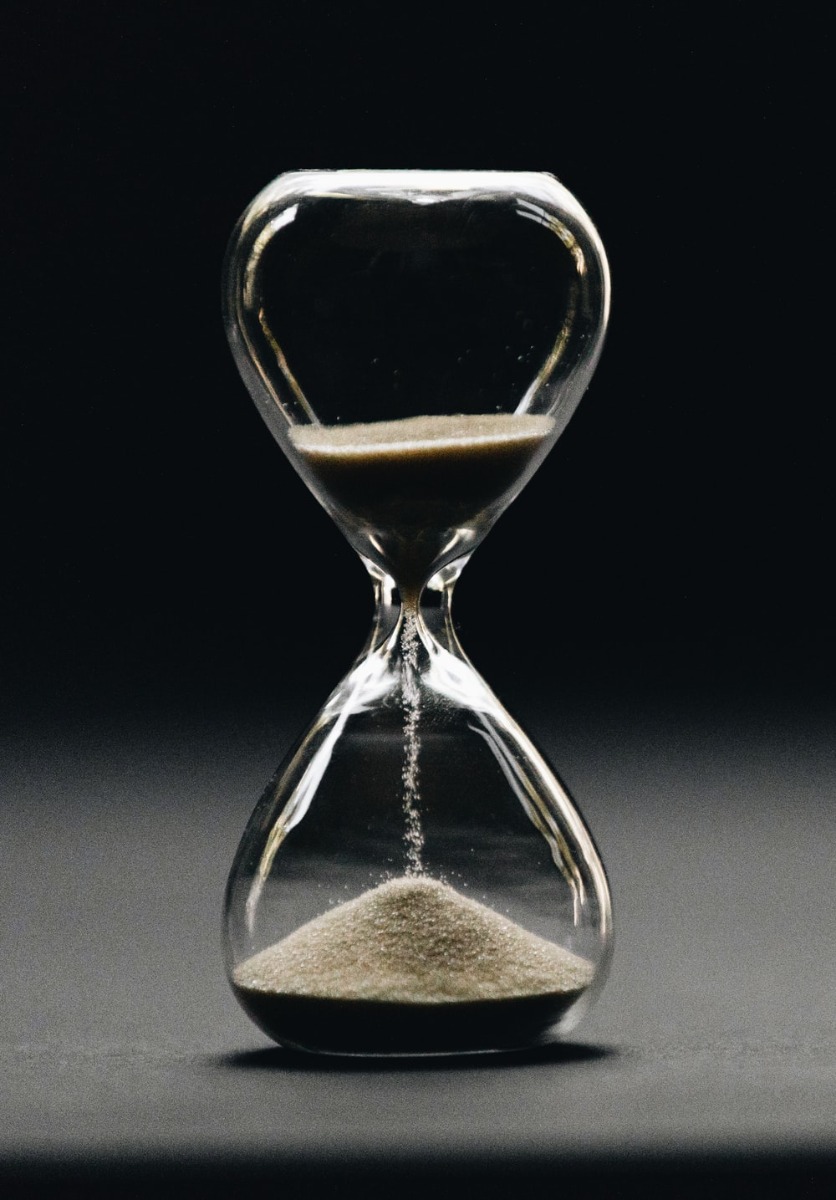
Hourglass is a device made of two bulbs connected vertically with each other with a narrow neck and a flowable substance like sand. The time is measured by the specific duration taken by the flow of substance from the high bulb to the lower bulb. The duration of time given by an hourglass is determined by the quantity and coarseness of the matter flowing between the bulbs, the size of the bulbs and the size of the neck.
(A hourglass with sand pouring through its neck)
Water clocks
The time in water clock is measured by the flow of the water. There are two types of water clocks; inflow and outflow. In the inflow, the water keeps filling with a constant flow and there are markers to see the passage of time. In the outflow everything is similar but the water instead of filling is drained in a constant flow. These water clocks were the most accurate and commonly used timekeeping device for a long period of time then they were replaced by the pendulum clocks
(A water clock’s descriptive diagram)
Candle clocks
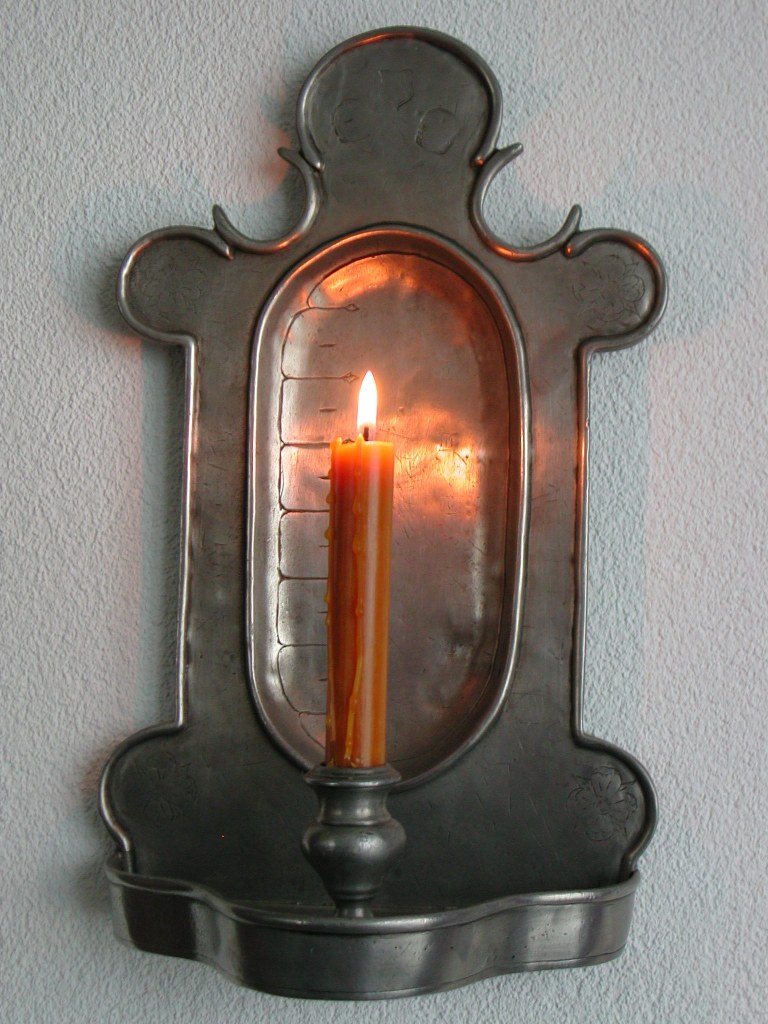
The candle clocks have markers in their holders and as it used to burn by the height of the candle the time was told. This used to be the meaning of time reeling at night as at time sundials didn’t work. These candles were 12 inches high, of uniform thickness and divided into 12 sections each of one inch. The candle used to burn down in 4hours making each section for 20 mins.
(A candle clock)
Clock tower
Clock towers started being made from the 1st century BC, but at that time they used to be equipped with the sundials. Later in Europe, a clock tower with turret clock was built in the year 1306. A clock tower is a tall building on which on all four side or even more, depending on building structure, there is a clock which helps people to tell time.
(Big Ben - A clock tower)
Turret clock
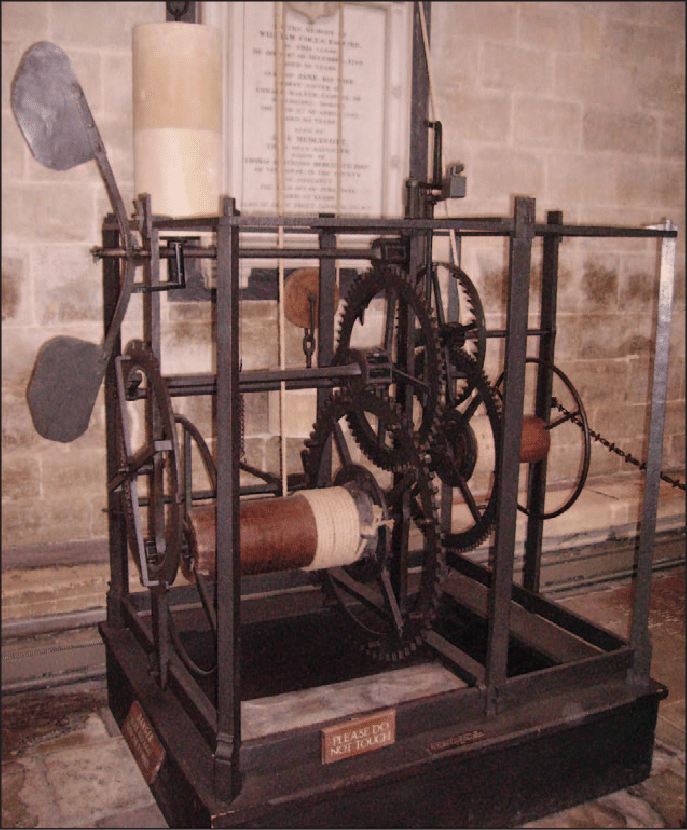
Turret clock is designed to be mounted in a huge building like a clock tower, city hall, and university buildings. They were built in the 12th century by the town halls and monasteries to tell the time to the general public. This clock works when the weights are attached to its wooden barrel helping in their movement. Their movements were controlled by verge escapement, with a folio as a controller. The verge and foliot escapement is the first mechanical escapement ever invented which helped in making turret clocks and later on were modified to work with wristwatches
(Salisbury Cathedral turret clock, 1386)
Pendulum clocks
The pendulum clocks uses a swinging weight named pendulum for timekeeping. With each swing of the pendulum, it releases a tooth of the escape wheel making the clock train to move forward in a constant manner. The advantage of pendulum is that it is easy to make and makes precise oscillations (back and forth movement). It was invented in 1656 by Christiaan Huygens which was inspired by Galileo Galilei. These clocks were primary source of time for everyone until the electronic clocks came.
(A pendulum clock)
Conclusion
The timekeeping evolution has a vast history behind it. We have come from sundials to smart watches. The timekeeping is being done from centuries, and still watchmaker are making newer functions for a watch.