

Let’s start with the obvious: tariffs make expensive things even more expensive.
In cases of luxury goods they quietly add layers of cost before the goods even reach the showcase.
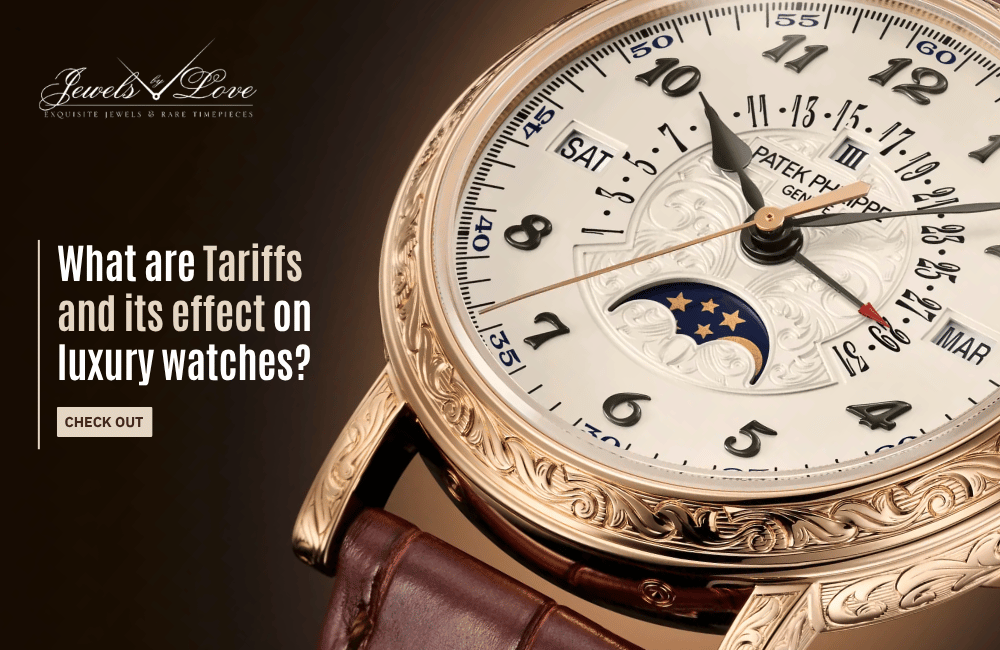
You’ve probably heard about Trump’s 39% tariff on Swiss watches and Swatch’s response that stirred the market. That headline wasn’t just but was a reminder that trade policies can shake the luxury industry faster than any design trend.
For buyers, tariffs don’t just influence global numbers but also reshape what ends up on your wrist and how much you pay for it.
In this blog, we’ll look at how tariffs affect luxury watches, why they matter, and what smart options still exist to make your next purchase feel like a win.
So, let’s get started.
What Is a Tariff?
A tariff is basically a tax a country charges on imported goods. Think of it as the government’s way of adding a little toll every time a foreign product crosses the border.
When that happens, the importer, not the brand, pays the extra cost. But of course, that cost doesn’t just vanish. It gets passed along the chain until it shows up in the final price tag you see in stores.
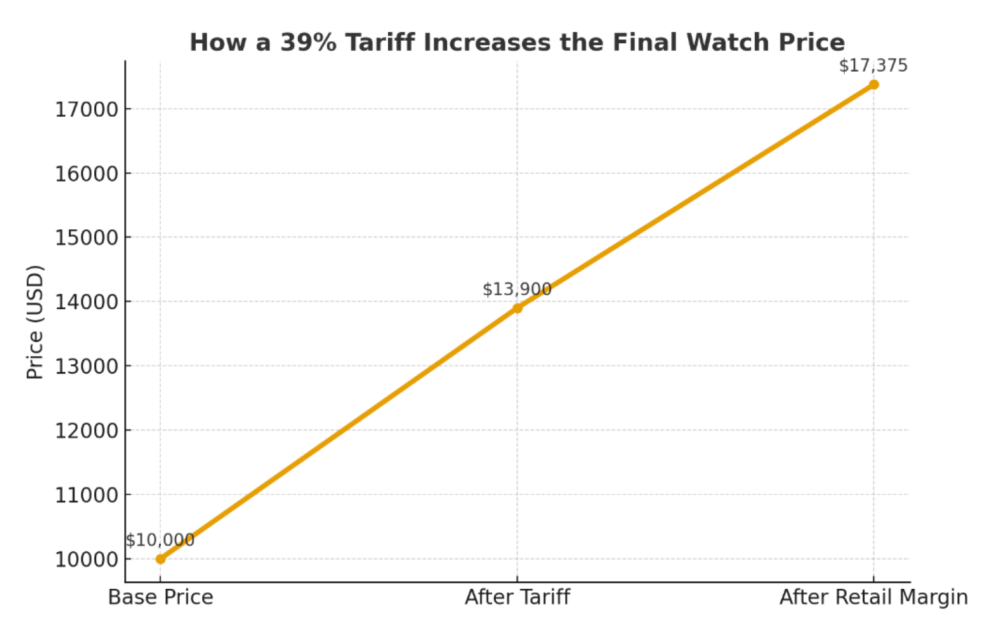
Take a $10,000 Swiss watch, for example. Under a 39% U.S. tariff, the importer owes an extra $3,900 before it even hits the shelf. That means the landed cost climbs to $13,900, before the retailer adds their margin. And once that happens, you can see how a trade policy suddenly turns into a several-thousand-dollar difference for the buyer.
Tariffs are meant to protect domestic industries or generate government revenue, but in luxury markets where products are already high-end imports. They mostly translate into higher prices for consumers.
We’ve already seen this play out.
After the 39% tariff was announced, Swatch Group increased prices suddenly across several brands by roughly 5–10%, according to Reuters. The Omega Speedmaster rose from about $8,400 to $9,000, while Patek Philippe increased U.S. prices by around 15%. Even brands like Rolex and Audemars Piguet, which initially resisted, are expected to follow (source).
So, in short, tariffs on luxury watches don’t just affect trade reports or corporate margins. They show up right there, on your receipt.
Global Watch Exports and Tariff Effects
Tariffs didn’t just tweak prices but they also rewired how the global luxury watch market moves.
1. The Shockwave in Numbers
When the U.S. introduced a 39% tariff on Swiss watches, it instantly flipped trade flows.
In September 2025, exports from Switzerland to the U.S. dropped 55% and slid from CHF 355 million to CHF 158 million (Source: Monochrome Watches).
That single collapse erased almost all the growth from other regions. Without the U.S. decline, Swiss exports would’ve grown nearly 8% that month.
What it means:
America, once a pillar for Swiss luxury suddenly became a tough sell. The tariff didn’t just add cost; it changed where and how watches were sold.
Even for high-end buyers, a 39% import duty made a difference. Retailers struggled to move inventory as prices climbed, and collectors began comparing international prices. Many found that buying the same watch abroad or through duty-free stores saved them thousands.
2. The Rise of New Markets
While the U.S. slowed under tariff pressure, other regions quickly filled the gap.
In September 2025, the U.K. overtook the U.S. as Switzerland’s largest watch export market, with shipments rising by about 15.2%. (Source).
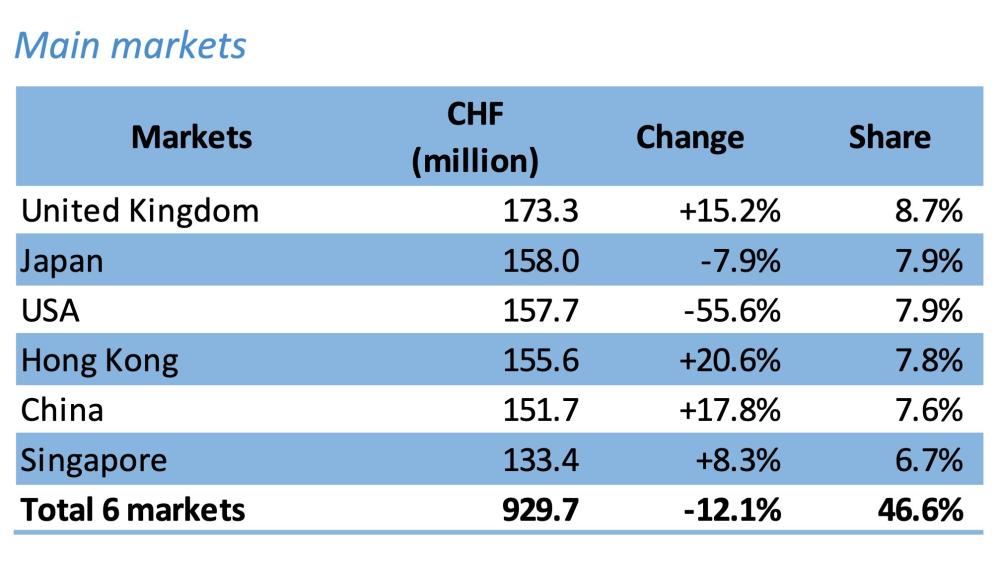
Image Source: Federation of the Swiss Watch Industry
At the same time, Japan and Singapore posted strong gains as brands rerouted supply and consumers looked for better pricing environments.
Greater China which had been struggling through most of 2024 even saw a brief rebound, with exports up 17.8% for mainland China and 20.6% for Hong Kong that same month. Meanwhile, European Union countries like France, Italy, and Germany eased slightly, each down around 4–6% year-to-date (Source).
What it means:
Luxury doesn’t disappear when taxed - it simply moves.
When the U.S. market became more expensive, brands redirected their focus to regions where import duties were lower and currency conditions were more favorable. Buyers followed suit, purchasing from boutiques in the U.K. or Asia where prices stayed closer to pre-tariff levels.
In effect, the tariff didn’t shrink global demand; it redistributed it. The same Swiss watches were still being sold just in different cities, through different channels, and often to the same clientele willing to travel or shop abroad to avoid inflated U.S. prices.
3. How Brands Tried to Cushion the Blow
Swiss watchmakers saw the storm coming long before the tariffs landed. In the months leading up to August 2025, many brands quietly shipped extra inventory to the U.S., building up to two or three months’ worth of stock. (source)
The goal was simple: keep shelves full and prices steady for as long as possible once the 39% tariff took effect.
But the relief didn’t last. By late 2025, brands including Rolex, Omega, and Patek Philippe had all raised their U.S. retail prices generally between 3% and 10%, depending on the model. Industry analysts now estimate that if the tariff remains in place, overall prices could rise another 15–20% over time to absorb the full cost.
What it means:
Brands are walking a tightrope for protecting margins while trying not to lose loyal collectors.
Some are choosing to absorb part of the impact, reducing profit per sale to keep customers on side. Others are shifting marketing and inventory toward Europe, Japan, and the U.K., where trade conditions are steadier.
For now, the strategy is simple: maintain perception, protect brand equity, and hope the political winds change before buyers do.
4. The Shift in Buyer Behavior
Collectors aren’t passive in this story. As U.S. prices rose, many started shopping abroad purchasing in Europe, Japan, St maritime or other duty-free zones where the same models cost far less.
Pre-owned and grey-market dealers also saw a bump as buyers sought smarter ways to secure pieces without absorbing the tariff premium.
What it means:
Instead of paying inflated prices at American boutiques, many began sourcing watches in Europe, Japan, and duty-free hubs where prices stayed closer to pre-tariff levels. Some turned to trusted pre-owned and grey-market dealers, which often offered better value on identical models.
For brands, this shift signals a long-term change in buying patterns, one where location matters less than accessibility and price transparency. If tariffs persist, luxury watchmakers may start rebalancing inventory toward international markets and adjusting U.S. retail strategies to compete with overseas demand.
Shopping Duty-Free: Where to Save on Tariffs and Taxes
When tariffs and local taxes push prices up, smart collectors simply look elsewhere. Around the world, several destinations make buying a luxury watch far more appealing. Thanks to low import duties, refund schemes, or outright tax-free shopping.
St. Maarten (Caribbean)
The entire island of St. Martin/Sint Maarten operates as a duty-free port, meaning there are no sales taxes or customs duties on imported goods. High end Watches, jewellery, and designer labels are often 20–40% cheaper than in the U.S. or Europe, according to local shopping guides.
If you’re planning a trip, you can check out this detailed guide to luxury shopping in St. Martin, it highlights the best spots for duty-free deals and what to expect from boutique pricing on the island.
Singapore
Singapore remains a global watch hub with no import duties on most consumer goods and a 9% Goods and Services Tax (GST) which tourists can reclaim.
Major retailers like The Hour Glass and Cortina Watch carry brands from Patek Philippe to Cartier, and travellers can use the Tourist Refund Scheme to reclaim GST, effectively turning the purchase into a duty-free deal.
Japan
Japan’s luxury watch market is even stronger. By early 2025, Tokyo had become the #2 market for Swiss watches.. Tourists benefit from tax-free shopping; most luxury retailers waive the 10% consumption tax at checkout for eligible foreign visitors.
Add a weaker yen against the dollar, and prices in Japan are often more competitive than in the U.S. or Europe. The combination of strong selection and easy tax exemption makes Japan a prime destination for collectors.
Other Global Hubs
- Hong Kong and Macau remain major watch-shopping destinations with 0% sales tax, drawing large numbers of buyers from mainland China.
- European capitals such as Paris, Milan, and Geneva entice tourists with VAT refund schemes, letting them claim part of the tax back on departure.
- Dubai Duty Free offers wide selections with full tax exemptions, while Australia occasionally hosts tax-free events aligning prices closer to U.S. levels.
Authorized Duty-Free Retailers: Jewels by Love in St. Martin
If you’re someone who enjoys fine watches and a bit of sunshine, St. Martin is where both meet perfectly. The island is entirely duty-free, so luxury shopping here comes without added sales taxes or import duties.
In Philipsburg, the Dutch side’s capital, you’ll find Jewels by Love, an authorized retailer for Swiss brands such as Patek Philippe, Breguet, and Cartier. It’s a trusted name on the island, known for offering the same world-class collections you’d see in major cities, only without the extra layers of tax and tariff.
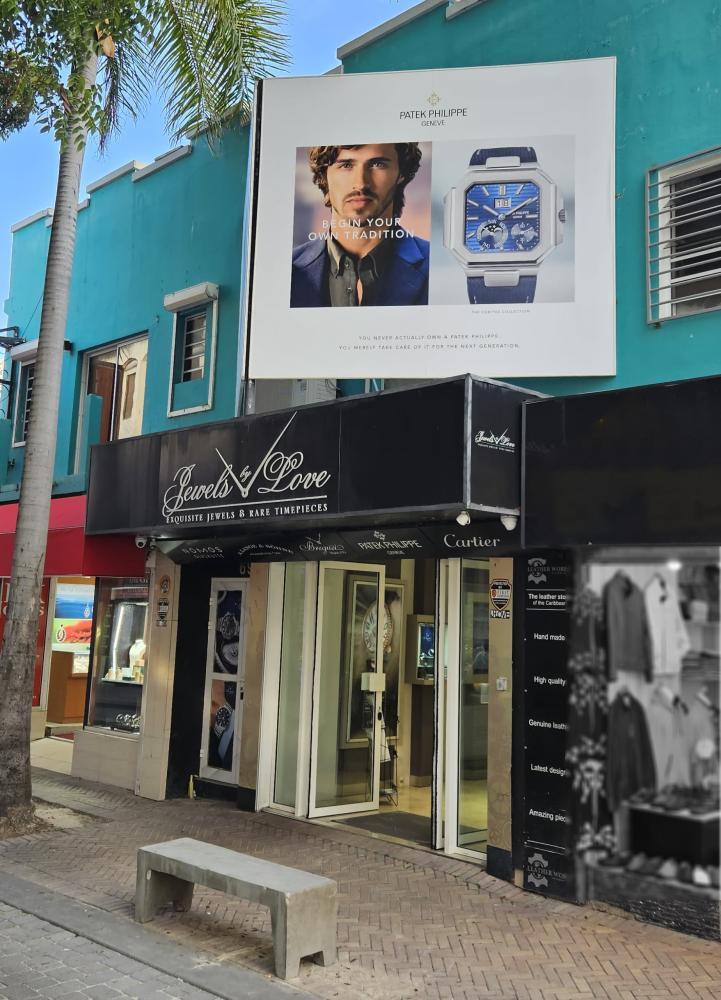
With roots dating back to the 1800s, the Mahtani family now in its sixth generation has built Jewels by Love into one of the Caribbean’s most respected luxury jewelers. Their long-standing partnerships with the world’s finest watchmakers, including Patek Philippe, Cartier, Breguet and Nomos, reflect a heritage of trust and expertise that few retailers worldwide can claim.
St. Martin itself adds to the appeal. Between its turquoise beaches, French-Caribbean flair, and relaxed atmosphere, shopping feels effortless like part of the holiday rather than a side errand.
If you visit the island, make time to stop by Jewels by Love. You can also explore our collection online or contact our team to speak with an expert about current pieces and availability.