

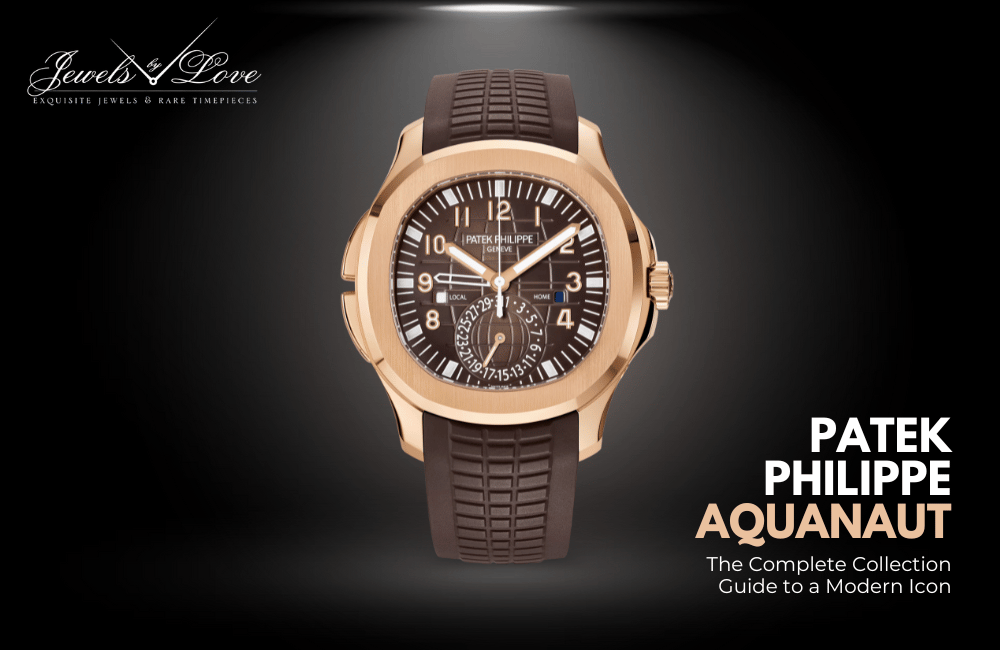
The Patek Philippe Aquanaut is a unique addition to the modern history of the Patek Philippe brand. It was launched in 1997, and it represented a clear paradigm shift with a strong emphasis on maintaining brand traditions.
In tandem with the Nautilus, the Aquanaut represented another side of luxury with a more laid-back spirit. This was all about simplicity, about ease of wear without compromise to its heritage as Patek Philippe. It was meant for the collector who wanted an alternative, not only sporty but belonging none the less to this brand universe.
The design spoke quietly but clearly. The rounded-octagonal case gave it immediate identity. The embossed dial added depth without excess. The rubber strap was unusual for Patek Philippe at that time, but it was chosen for comfort and long-lasting use, not just to look different. Everything worked together. Nothing felt forced.
As the collection grew, the Aquanaut retained its core character. Time-and-date models formed the foundation. Travel time references followed, then chronographs and more complex pieces. Every subsequent citation carried the same theme: practicality combined with refined design.
The Aquanaut has been deemed one of the modern classics of our era. The Aquanaut represents how Patek Philippe adapts to changing trends, yet remains faithful to itself.
This guide looks at the Aquanaut from the beginning. How it started. How it evolved. How its design and mechanics shaped the collection we see today.
Let’s start from the beginning.
Where It Started: The Aquanaut Arrives in 1997
By the mid-1990s, the Nautilus series had already taken root in the market. Instead of replacing the series, Patek Philippe chose to coexist in the market by launching something new and contemporary alongside the Nautilus series. Hence, the launch of the Patek Philippe Aquanaut in 1997.
The Aquanaut drew from the Nautilus without copying it. The rounded-octagonal case shape was familiar, but the execution felt lighter and more relaxed. The intent was clear. A luxury sports watch aligned with changing lifestyles, without leaving Patek Philippe’s design language behind.
Two elements defined the early Aquanaut: First, the rubber strap. It was the brand’s first, engineered for durability and comfort, and designed to handle water, heat, and daily wear. Second, the dial. A raised grid pattern replaced traditional finishes, paired with Arabic numerals for clarity and balance.
The first reference, 5060A, came in stainless steel with a compact case, strong water resistance, and a closed caseback. Let’s find out more about it.
Early References: The First Aquanauts
Ref. 5060A (1997)
The Aquanaut debuted with the ref. 5060A in stainless steel. Its 35.6mm case remained proportionate with a black rubber strap that came with it. The waterproofness reached 120m. This is sufficient for daily wear near water. The automatic caliber 330 SC powers this piece because of its reliability and thin profile. Production was modest, shaped by movement availability rather than any formal limitation.
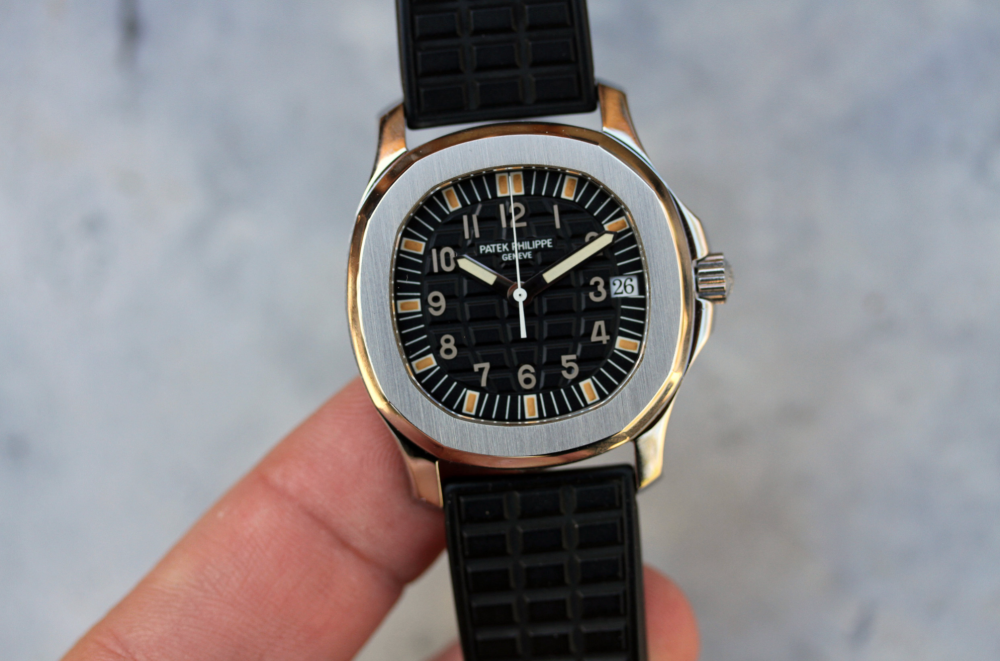
Image Caption: Patek Philippe Aquanaut Ref. 5060A (1997), marking the debut of the Aquanaut collection.
Ref. 5060J (1997)
Patek Philippe also made very few pieces in yellow gold (5060J) in addition to the steel model. The specifications mirrored the steel version, with the material providing a more traditional expression of the same design.
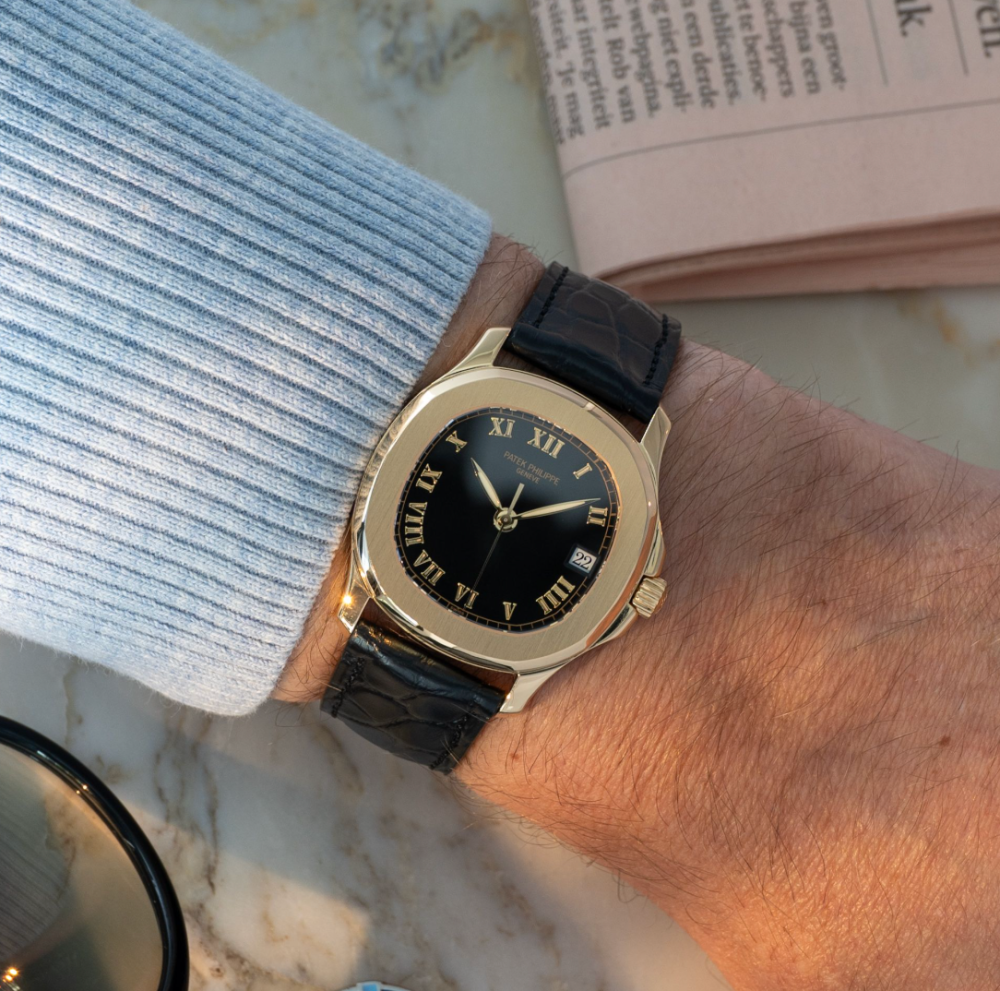
Image Caption: Patek Philippe Aquanaut Ref. 5060J (1997), a rare yellow-gold version of the first Aquanaut.
Ref. 5065A “Jumbo” (1998)
In 1998, Patek reacted to the demand for a larger case with the 5065A. It was enlarged to 38.8 mm in diameter, and a sapphire back was introduced. This source was introduced in the calibre 315 SC, which meant that the movement could first be seen in an Aquanaut. The buyers had an option of the rubber strap or a stainless steel bracelet.
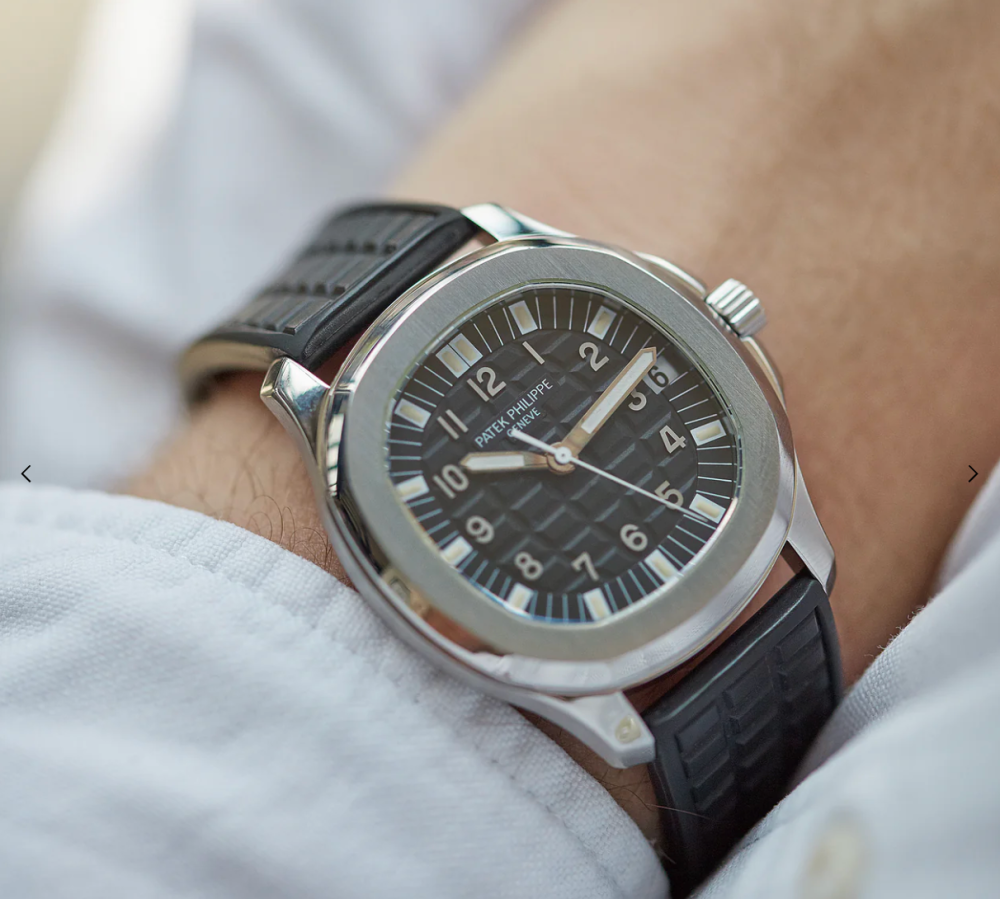
Image Caption: Patek Philippe Aquanaut Ref. 5065A “Jumbo” (1998), featuring a larger case and the first sapphire caseback in the Aquanaut line.
Ref. 5065J (1999)
A year later, 5065J launched the Jumbo line in 18k yellow gold and a gold bracelet. This indicated that the Aquanaut could be dragged in and out of more valuable materials without this altering its identity.
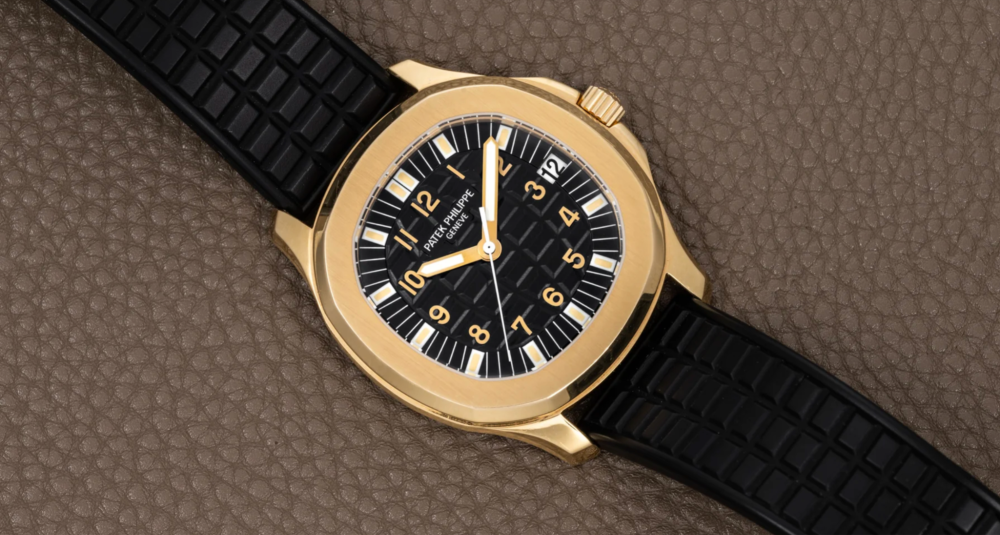 Image Caption: Ref. 5065J released in 1999, the Jumbo Aquanaut rendered in 18k yellow gold.
Ref. 5064A (1998)
The 5064A entered the market with a 34 mm mid-size. It also had the same type of case shape and dial, but it was driven by a quartz movement. It provides a smaller version in the assortment
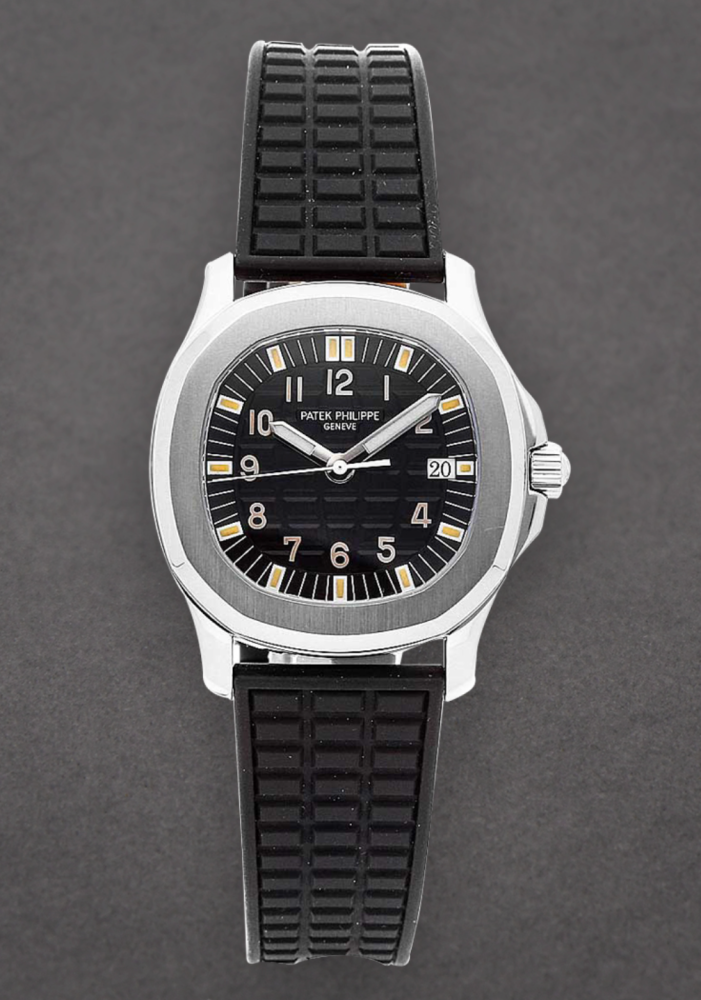
Image Caption: PRef. 5064A (1998), a compact quartz Aquanaut.
Ref. 4960A (1998)
The 4960A was the smallest and oldest Aquanaut of this period, being only 29.5 mm and also firing the quartz calibre. It added the extra line length without changing the essential design feature of it.
These references led to the development of the Aquanaut as a whole family as opposed to a single experiment by the end of the 1990s. The basics were in, and the collection was to enter the next stage.
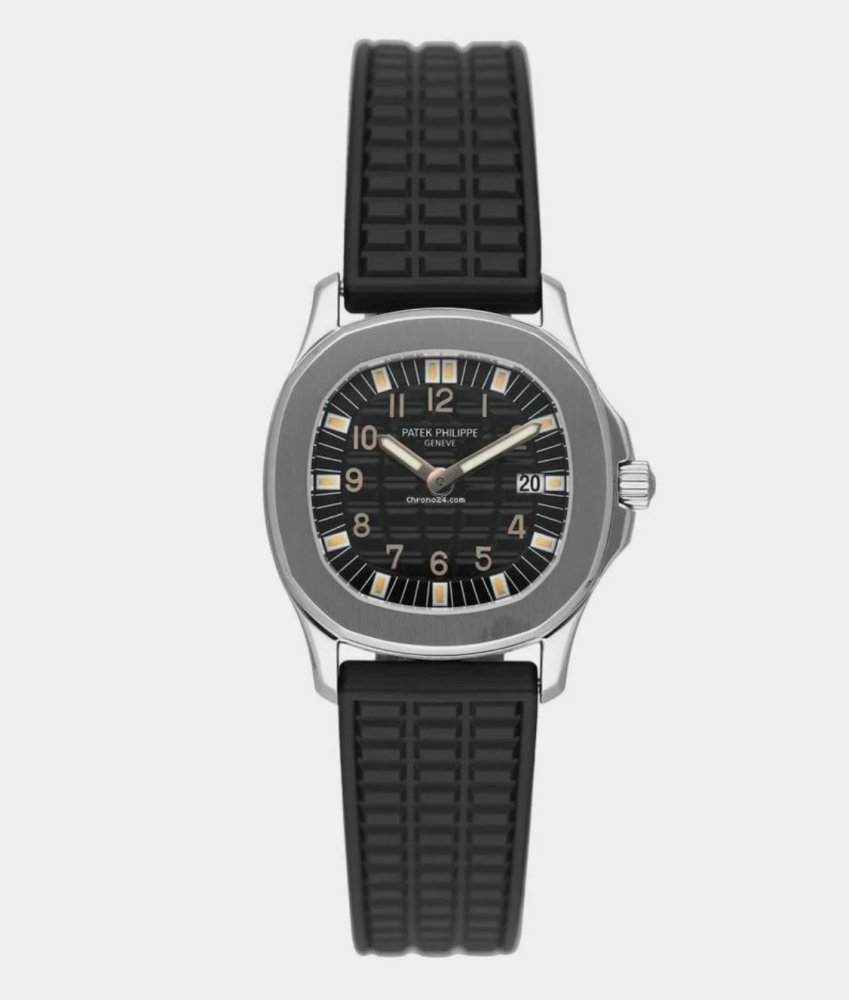
Image Caption: Ref. 4960A (1998), a 29.5 mm quartz model.
The 2000s Update: A Clearer, More Confident Aquanaut
However, in the mid-2000s, the Aquanaut did not have to prove itself as a watch. It needed to evolve. Thus, in 2007, Patek Philippe celebrated the tenth anniversary of the Aquanaut collection without altering the identity of the collection. It simply refined it. This is the Aquanaut as we know it today.
Ref. 5165A (2007)
The 5165A replaced the previous mid-size models. Its case measured 38.8 mm, maintaining its familiar proportions while introducing a softer, more fluid case design. The bezel edges were subtly rounded, and the dial pattern was refined to appear cleaner and less pronounced. A sapphire caseback became standard, revealing the automatic calibre 315 SC. Water resistance rating is usually 120 metres.
Image Caption: Aquanaut Ref. 5165A (2007), 38.8 mm case with calibre 315 SC.
Ref. 5167A (2007)
The most significant variation that came with this model update was the 5167A. At 40.8 mm, it became the first Aquanaut to go above the 40 mm mark. Despite the increase in diameter, the case stayed slim at just over 8 mm. It provides comfort on the wrist. The dial layout was revised, with larger Arabic numerals and a cleaner date display. Inside sat the automatic calibre 324 SC. This work immediately set a standard for this collection.
This reference quickly became the standard bearer for the collection.
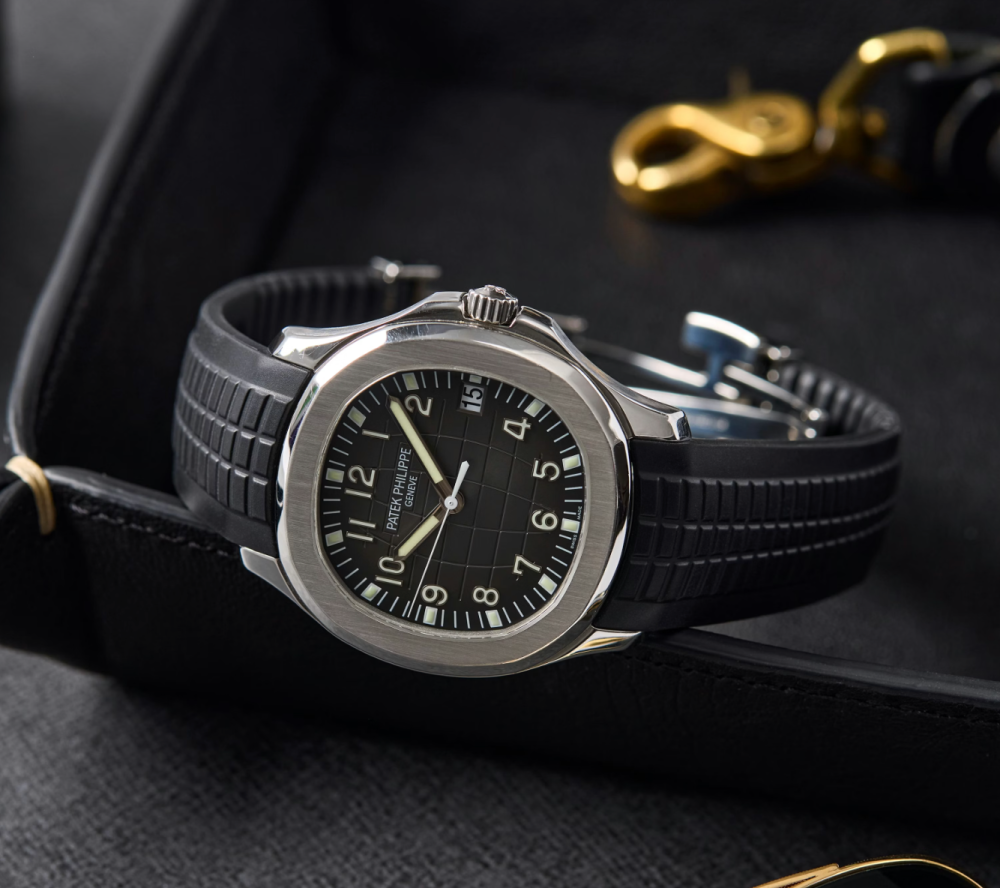
Image Caption: Ref. 5167A, the first 40 mm Aquanaut and the collection’s defining reference.
Note - As of 2025, it is increasingly being talked about that the 5167A may be reaching its run-out period. There has been no official statement from Patek Philippe regarding this, but it is becoming increasingly plausible that this particular reference may be reaching the end of its production life. For those collectors who have been following the 5167A, now is the best time to get hold of this.
Movement Update: Calibre 324 SC
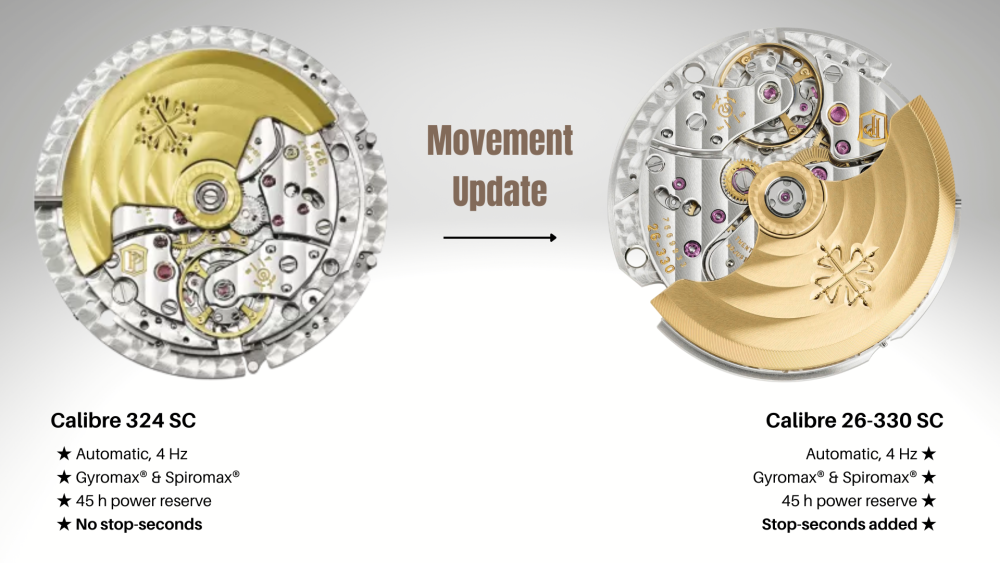
Patek Philippe unified the Aquanaut time-and-date models around the calibre 324 SC starting in 2008. Compared to earlier movements, it ran at a higher frequency and incorporated modern technical solutions, including a Gyromax® balance and Spiromax® balance spring. A stop-seconds function was also added. Later examples transitioned quietly to the calibre 26-330 SC, offering incremental improvements while keeping the same architecture.
Ref. 5167/1A (2008)
The 5167/1A reintroduced the stainless-steel bracelet. Unlike the earlier polished version from the 1990s, this bracelet featured a satin finish with polished accents and integrated more cleanly with the case. It offered an alternative expression of the Aquanaut while keeping the same case and movement as the strap model.
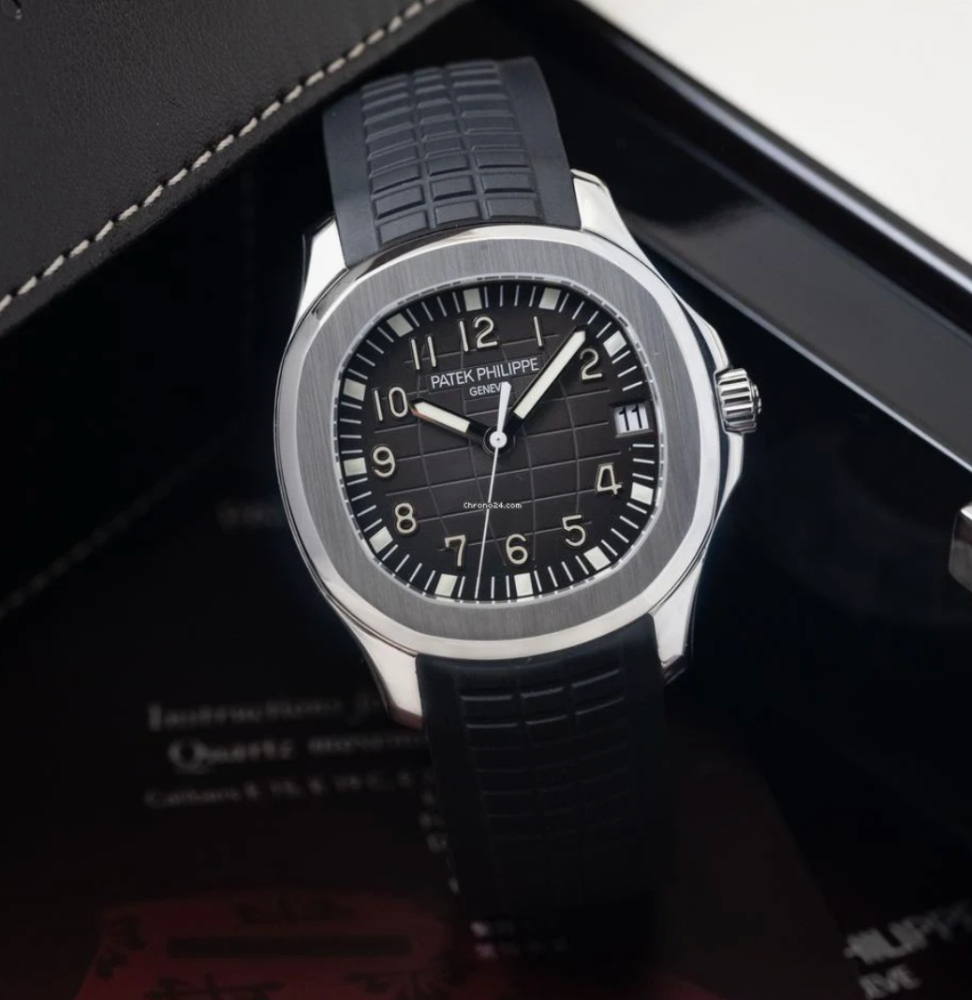
Image Caption: Aquanaut Ref. 5165A, 38.8 mm case with calibre 315 SC and sapphire caseback.
Ref. 5167R (2009)
In 2009, Patek Philippe expanded the line into precious metal with the 5167R. The 18k rose gold case was paired with a matching brown dial and rubber strap, showing how the Aquanaut could carry warmth and richness without losing its understated tone. Mechanically, it mirrored the steel versions.
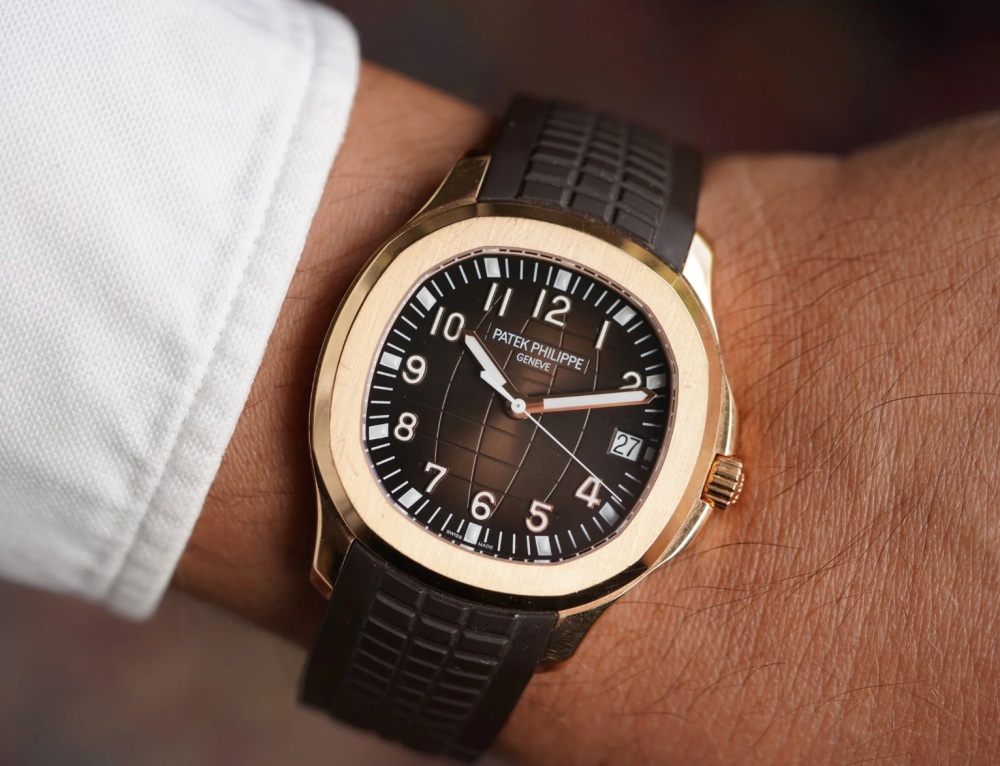
Image Caption: Aquanaut Ref. 5167R (2009), 40.8 cm rose gold Aquanaut.
Complications and Expansion
Once the base was settled, Patek expanded the Aquanaut without losing control of its proportions or purpose.
Aquanaut Travel Time – Ref. 5164A / 5164R (2011)
The first complication arrived with the 5164. Dual-time functionality was added via pushers that adjust the local hour hand independently. Home and local day-night indicators sit on the dial, with the date linked to local time. Thickness increased modestly to around 10 mm. The steel version became a staple for frequent travellers before later being withdrawn, leaving gold as the ongoing option.
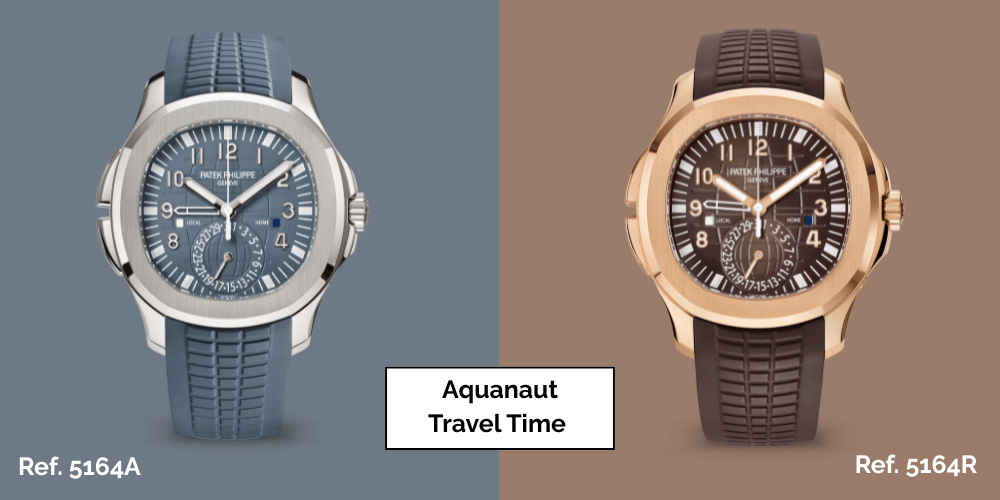
Image Caption: Aquanaut Travel Time Ref. 5164A (left) and Ref. 5164R (right), introduced in 2011.
Advanced Research – Ref. 5650G (2017)
Created for the Aquanaut’s twentieth anniversary, the 5650G combined Travel Time with experimental components. Limited to 500 pieces, it introduced new balance spring geometry and revised pusher mechanics. Its partially open dial made its intent clear. This was a technical statement, not a mainstream model.
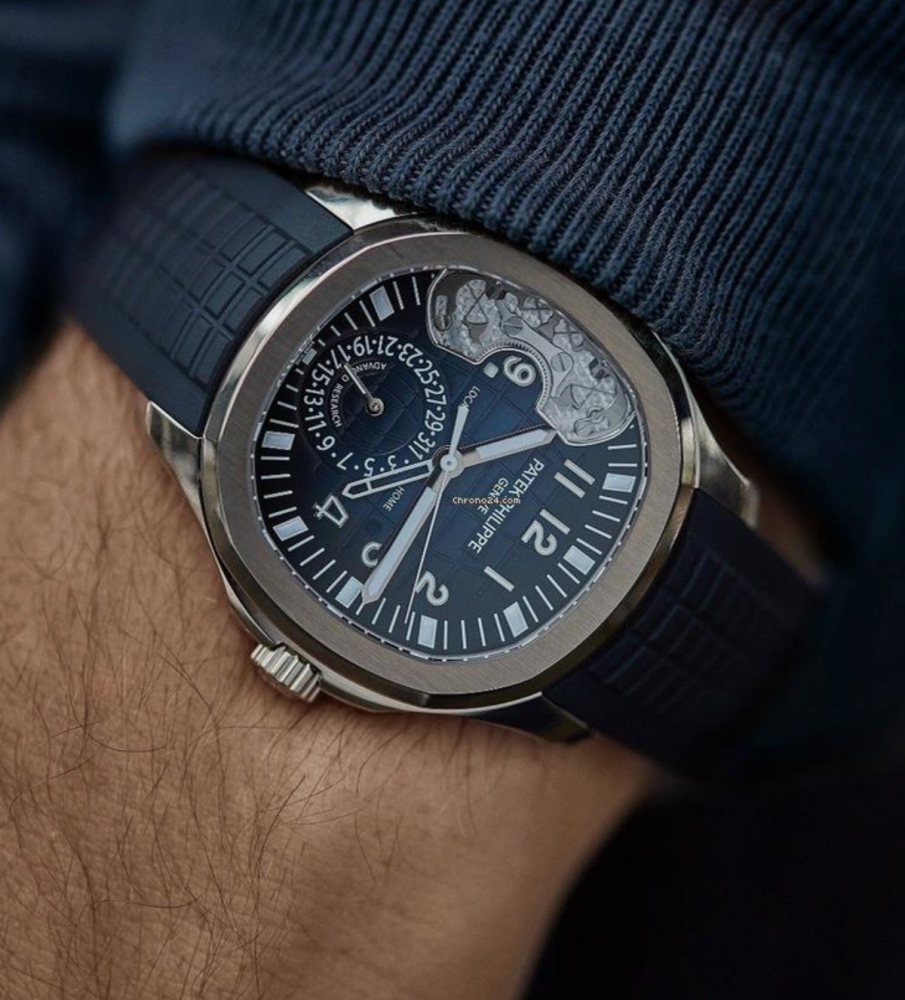
Image Caption: Aquanaut Advanced Research Ref. 5650G (2017), limited to 500 pieces.
Jumbo – Ref. 5168G (2017)
The 5168G increased the case to 42.2 mm and debuted a blue gradient dial. Despite the size, thickness stayed close to 8 mm. Later, a green-dial variant followed. Both used the same movement as the 5167 but offered a stronger wrist presence.
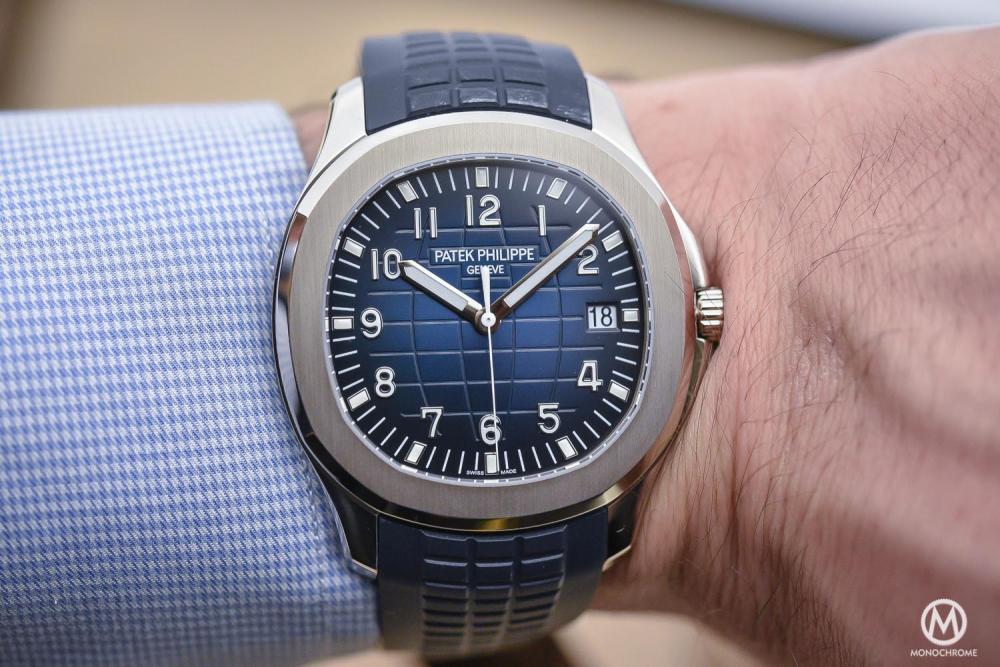
Image Caption: Patek Philippe Aquanaut Jumbo Ref. 5168G (2017), featuring a 42.2 mm white-gold case and blue gradient dial.
Chronograph – Ref. 5968A / 5968G (2018)
The Aquanaut chronograph arrived with the 5968. Its 42.2 mm case housed the CH 28-520 C flyback chronograph. The dial kept a single 60-minute counter to maintain legibility. Steel versions introduced brighter accents, while later gold models offered darker tones. The approach remained consistent. Functional. Balanced. Direct.
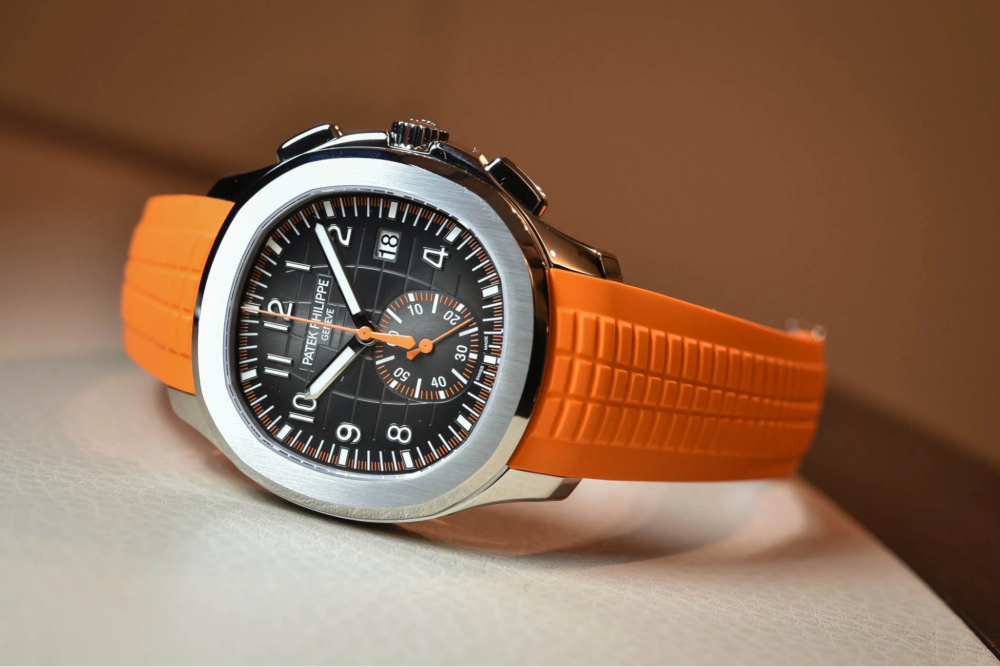
Image Caption: Patek Philippe Aquanaut Chronograph Ref. 5968, bold 42.2 mm case with a clean flyback chronograph design, built for clarity and everyday strength.
Aquanaut Luce and Ladies’ Models
Developed alongside the men’s line, not separately. Smaller cases, quartz movements, and diamond bezels were introduced while preserving the Aquanaut’s case shape, dial texture, and numerals.
Ref. 5067A / 5067R (2004)
The first formal Aquanaut Luce. 35.6 mm cases in steel or rose gold, quartz-powered, often diamond-set. Proportions closely followed the original 5060.
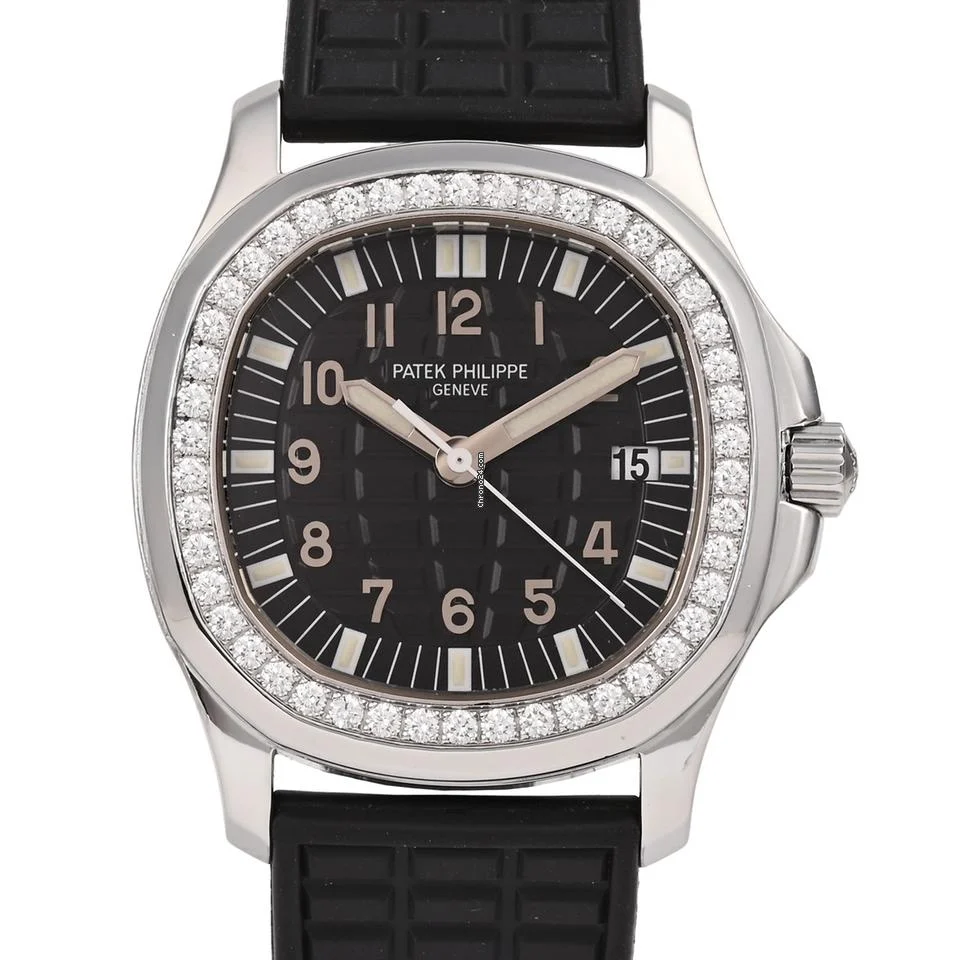
Image Caption: Patek Philippe Aquanaut Luce Ref. 5067A / 5067R (2004), the first dress-focused Aquanaut with refined proportions and diamond detailing.
Ref. 5267/200A (2021)
Updated Luce in 38 mm stainless steel. Quartz movement, diamond bezel, expanded dial colours. Larger presence without design changes.
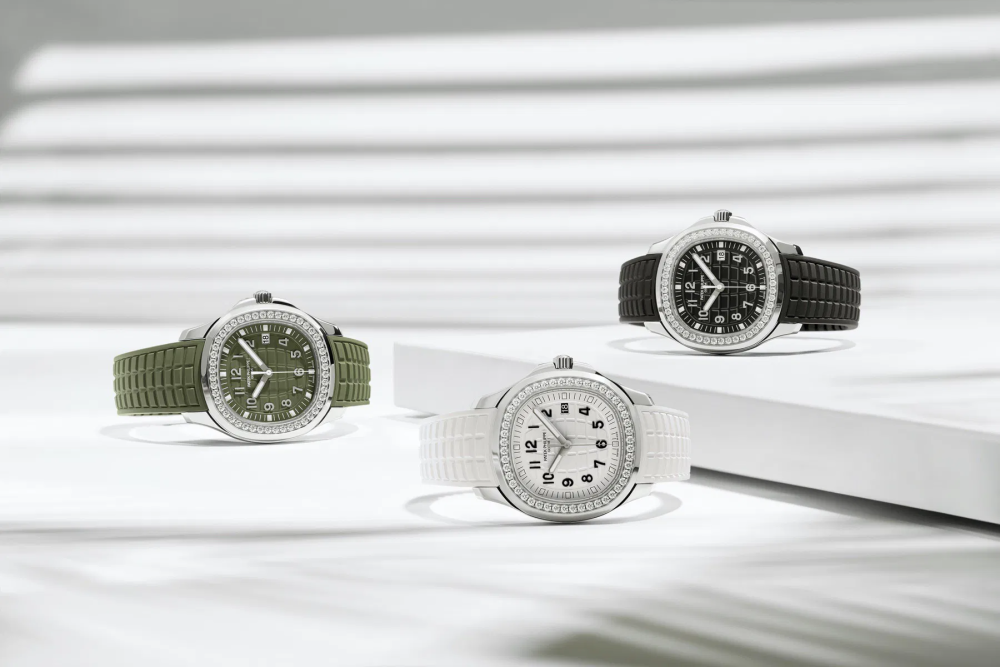
Image caption: Patek Philippe Aquanaut Luce Ref. 5267/200A (2021), modern 38 mm update with diamond bezel and fresh dial colours.
Ref. 5268/200R (2021)
First automatic Aquanaut Luce. 38 mm rose gold, diamond bezel. Marked a technical step forward for the Luce line.
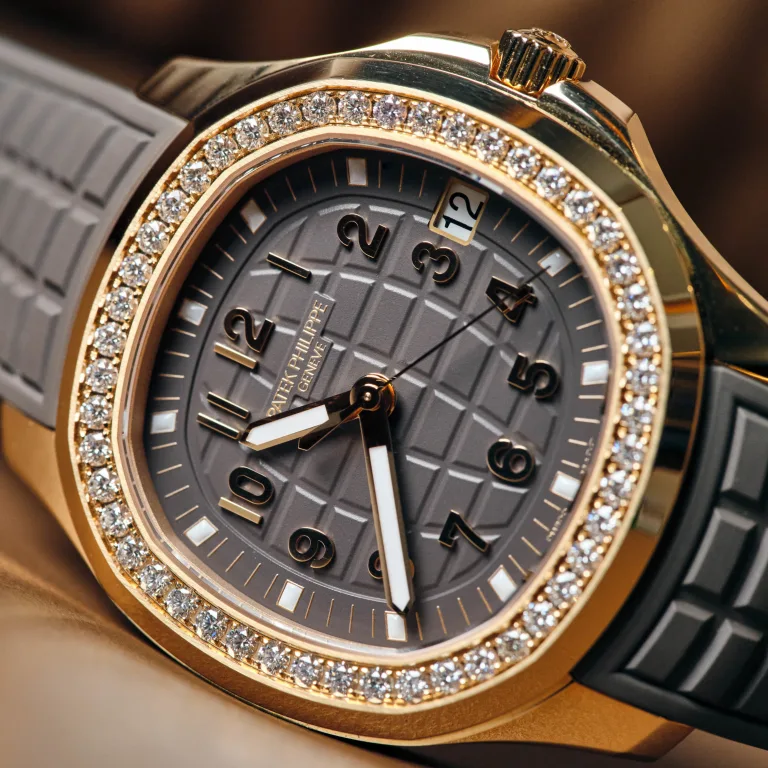
Image Caption: Patek Philippe Aquanaut Luce Ref. 5067A/5067R, the first formal Luce model in steel and rose gold.
Ref. 5269/200R – Luce Travel Time (2021)
Introduced dual-time functionality to the Luce range. Same Travel Time system as men’s models, adapted to a smaller case.
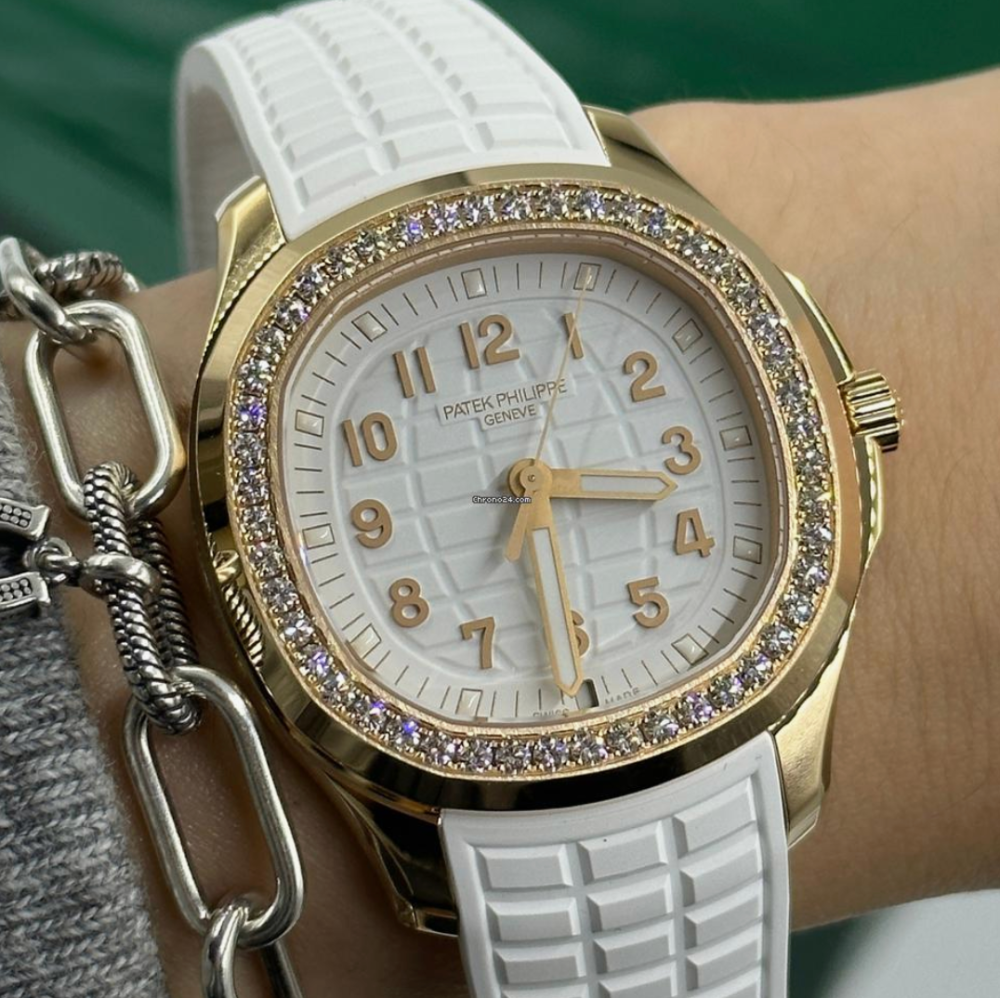
Image Caption: Updated Aquanaut Luce in 38 mm steel, featuring a diamond bezel and refreshed dial colours.
Ref. 7968/300R – Luce Chronograph (2022)
Most complex Luce to date. Flyback chronograph with a multi-coloured sapphire and diamond bezel, built on the same Aquanaut architecture.
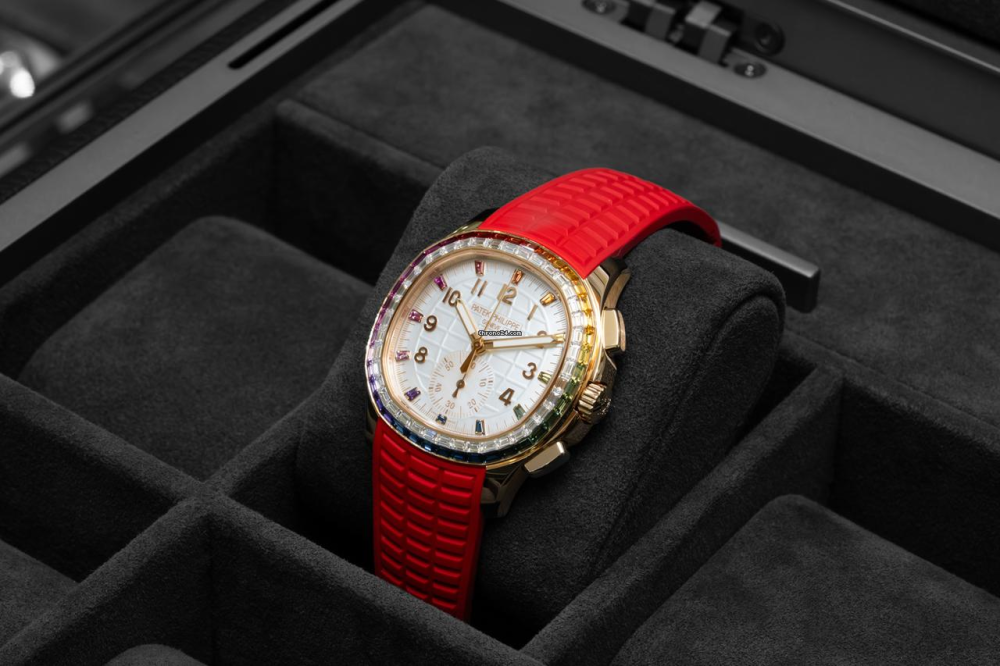
Image caption: Advanced Aquanaut Luce so far, a flyback chronograph and a bold sapphire-and-diamond bezel built on the iconic Aquanaut design
Design & Mechanics: What Makes the Aquanaut the Aquanaut
The Aquanaut is defined by a small set of elements that never change.
Case & Dial
A rounded-octagonal case with alternating brushed and polished surfaces. Slim profile. Screw-down crown. 120 m water resistance. The embossed grid dial is exclusive to the Aquanaut. Arabic numerals with lume. Broad hands. Date at 3 o’clock with a discreet lume marker for balance.
Tropical Strap
Purpose-built rubber strap, resistant to water, UV, and daily wear. Pattern matches the dial. Light, flexible, and secure on the wrist. Central to how the Aquanaut wears.
Movements
Time-and-date Aquanauts are powered by Patek’s automatic 26-330 SC (earlier examples used the 324 SC). The movement runs at 4 Hz (28,800 vph), delivers around 45 hours of power reserve, and includes stop-seconds for precise setting. Finishing meets Patek Philippe Seal standards and is visible through a sapphire caseback.
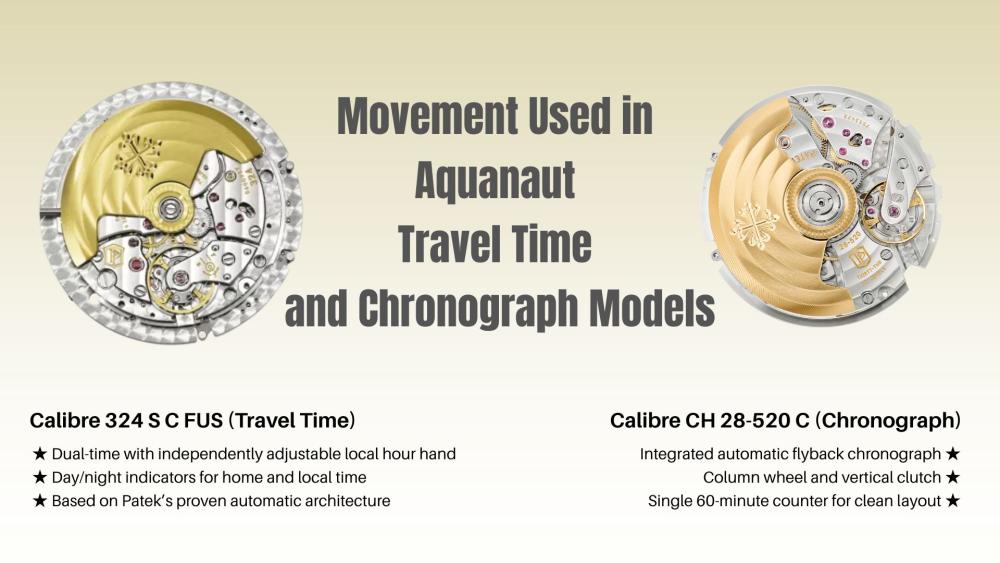
Travel Time models use the 324 S C FUS with an independently adjustable local hour hand, while chronograph references employ the CH 28-520 C, an integrated automatic flyback chronograph with column wheel and vertical clutch each built to the same mechanical and finishing standards.
Wearability
Compact thickness. High legibility. Durable construction. Finished to the same level as Patek’s dress watches, but intended for regular use.
Explore the Aquanaut at Jewels By Love
Jewels By Love is an authorized Patek Philippe retailer with a family legacy that spans six generations, tracing back to the 1800s. Based in Philipsburg, St. Maarten, JBL is trusted by some of the most respected names in fine watchmaking, including Patek Philippe, Cartier, Breguet and NOMOS.
At JBL, acquiring an Aquanaut is handled with care and expertise. Clients are guided through the collection by a knowledgeable team that values long-term relationships over transactions. Support continues well beyond the purchase, from advice to after-sales care.
You’re welcome to visit the boutique in St. Maarten and you can also browse the collection online on our website and contact our sales team for any enquiry.