


Welcome to the heartbeat of luxury watchmaking: the balance spring.
This tiny spiral is the unsung hero that keeps your prestigious timepiece ticking with impeccable precision.
In this comprehensive guide, we'll dive deep into why the balance spring isn't just a part of the watch but the soul of the entire operation.
If you have ever wondered what makes luxury watches tick with such elite accuracy?
It all boils down to the balance spring.
Though it looks like a small cog in a complex machine, the balance spring holds the key to mechanical watchmaking prowess.
So, if you're eager to understand everything from what balance springs are and how they function, to exploring the innovative balance springs used in renowned watches like Patek Philippe and Breguet, stick around.
You're about to discover the fascinating world of balance springs that could change how you look at your watch forever.
Let’s get started.
Understanding Balance Springs
Definition and Function
A balance spring, also known as a hairspring, is a crucial component in the timekeeping mechanism of a mechanical watch. It works in tandem with the balance wheel to regulate the watch's timekeeping.
Basic Mechanics: How Does It Work?
To understand its mechanics, imagine a swing in a playground. When you push it, it swings back and forth smoothly at a steady pace. This is similar to a key part of a watch called the balance wheel and the balance spring, which work together like a swing to keep time accurate in the watch.

( Diagram of the mechanism of balance/hairspring )
The balance wheel moves back and forth, and the balance spring helps pull it back each time it moves to ensure that it swings at a consistent speed. This movement is very important because it helps the watch keep time consistently accurate. You can think of it as the heartbeat of the watch.
When you wind the watch, you're storing up energy. This energy travels through the gear train to the balance wheel that helps it start swinging. As it swings, it works with other parts of the watch to move the hands that show you the seconds, minutes, and hours. So, this is the explanation of the balance spring mechanics that helps the watches to tell time precisely.
Materials and Properties
Steel: In the past, balance springs in watches were usually made of steel. Steel seems to be a pretty good material for this job but it can be influenced by magnets, temperature changes, and it can rust. These issues can make the watch less accurate because the steel spring might bend or change shape under these conditions.
Over time, watchmakers have come up with new materials to make these springs even better:
Nickel-Steel Alloys (Nivarox): This material was created in the early 1900s. It’s a mix of nickel and steel that handles temperature changes and magnetic fields better than plain steel. It’s super stable and reliable, which is why it’s still extensively used today.
Silicon: This material is revolutionary. Because, silicon springs don’t get affected by magnets or temperature changes at all. Their shape tends to be intact under different conditions, and they don’t rust or corrode. Famous watchmakers like Ulysse Nardin, Patek Philippe, and Rolex use silicon springs in some of their high-tech watches.
Parachrom: This is a special material developed by Rolex, made from a blend of niobium and zirconium. It’s really tough against shocks and magnetic fields. Parachrom springs are usually blue and are known for keeping time very accurately, even in tough conditions.
Historical Development of Balance Springs
The balance spring, sometimes called the hairspring, is a critical part of a mechanism in a mechanical wristwatch which provides more accuracy and preciseness in watches.
In this section, we will explore the significant events, initial findings, and work implemented by the renowned watchmakers for the development of a balance spring.
Key Historical Milestones
The discovery of the balance spring in the 17th century was one of the most critical developments for the timepieces' accuracy. The following are credited with inventing it:
Robert Hooke: A British physicist who, during the 1650s, postulated its use for regulating the oscillations of the balance wheel.
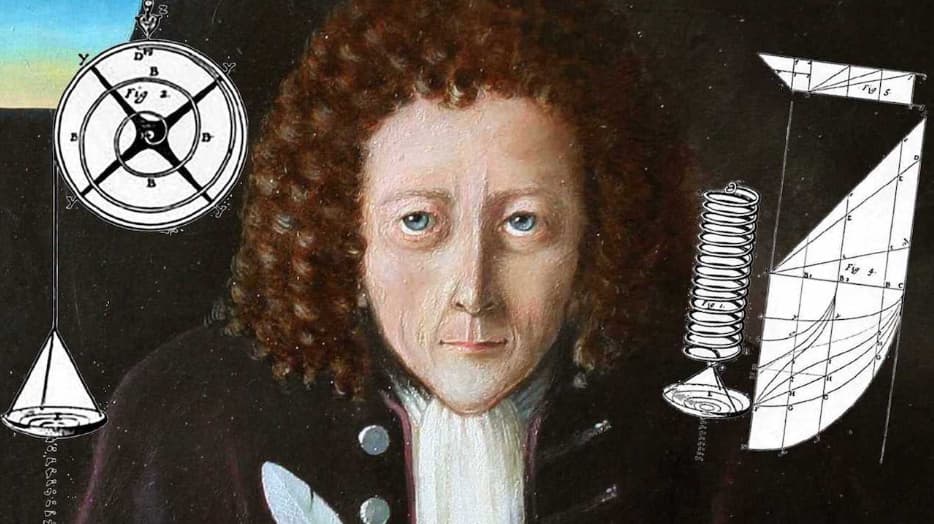
(Robert Hooke)
Christiaan Huygens: A Dutch physicist and mathematician. He invented the first practical balance spring in 1675 which significantly increased the accuracy of timepieces.

(Christiaan Huygens)
 (Balance spring believed to have been invented by Christiaan Huygens)
Early Innovations and Their Impact
The introduction of the balance spring revolutionized watch accuracy and reliability. Before its invention, mechanical watches were highly inaccurate, often losing or gaining several hours daily. The balance spring would regulate the oscillations of the balance wheel so that only minute or second differences in time would arise over a day. This development allowed portable timepieces to be far more reliable and critical for use during navigation and everyday activities.
Material: Early balance springs were made from steel which gave it the proper elasticity to regulate the motion of the balance wheel.
New Escapement Mechanism: The introduction of the balance spring made changes in the escapement mechanism possible and this is the invention that has evolved, with further modifications, into the lever escapement used today.
Christiaan Huygens and Further Developments
History of the balance spring can’t be complete without including the work of Christiaan Huygens. In collaboration with Parisian watchmaker Isaac Thuret, Huygens adapted his principle to functioning timekeepers, laying the foundation for modern horology.
Key refinements after Huygens' first form:
Overcoil Balance Spring: In the late 18th century, Abraham-Louis Breguet introduced the overcoil balance spring which has the effect of making the spring 'breathe' more concentrically, thereby helping in improvement in timekeeping.
Nickel-steel Alloys (Nivarox): have been in use since the early 20th century and have brought improved isochronism and resistance to temperature changes and magnetism.
Silicon Balance Springs: Introduced in the 21st century, silicon balance springs are known for their high magnetic resistance and resistance against temperature changes. Being non-reactive by nature. Which makes them stay safe from oxidation and corrosion allows them to significantly increase precision and life span.
Breguet's Pioneering Works
Abraham-Louis Breguet is one of the most influential figures in the history of horology. His significant innovations, including the creation of the Breguet overcoil, brought greater performance and reliability to mechanical watches.
This section covers Breguet's pioneering work on balance springs and their non-stop influence on watchmaking.
Advances in the Breguet Balance Spring
While the invention of the balance spring by Christiaan Huygens in 1675 was a breakthrough in improving watch accuracy, it had limitations. The flat balance spring, typically made of copper or iron with only a few coils, showed poor isochronism—a stable oscillation rate crucial for precise timekeeping.
In 1795, Abraham-Louis Breguet redesigned the balance spring. He elevated the final wind of the spring and reduced its curvature so that the spring would expand concentrically. This modification, known as the Breguet overcoil, allowed the balance spring to maintain a more consistent and concentric shape, critically enhancing timekeeping precision.

(Breguet OverCoil Balance Spring)
In 2006, Breguet introduced new alloys and synthetic material - silicon which has improved resistance to temperature variations, magnetic fields, and aging. Modern micro-engineering techniques have also allowed for more precise manufacturing.

( Silicon Breguet Balance Spring Overcoil)
Importance of the Breguet Overcoil
The invention of the Breguet overcoil had incredible significance for watchmaking:
Improved Accuracy: The concentric development of the balance spring led to more uniform oscillations, significantly improving the accuracy of mechanical watches. This innovation reduced errors caused by changes in the watch's position.
Superior Durability: The Breguet overcoil prevented the balance spring from taking a set, reducing wear on the balance staff and extending the lifespan of all watch movement parts.
Temperature Compensation: Breguet also devised a bimetallic compensation bar to counter the effects of temperature changes on the balance spring. This innovation further enhanced the accuracy and reliability of watches by minimizing the impact of thermal expansion and contraction on the spring.
Lasting Impact on Watchmaking
The Breguet balance spring is still used today in precision timekeeping instruments and was immediately adopted by all significant watchmaking firms of the period. As a matter of fact, between the years 1880 and 1910, most manufacturers would subtly mark "Spiral Breguet" or "Breguet overcoil" on the watches to show that Breguet had designed a given timepiece and was hence tentatively considered to be of superior quality and offering better accuracy.
The improvements that Breguet made to the balance spring are now part of the standard setup in the industry. Even the Breguet overcoil itself has become synonymous with high-quality mechanical Watches. Its adoption guarantees optimal functioning of the balance spring and hence the precision expected within luxury watches.
Patek Philippe and the Spiromax Balance Spring
Patek Philippe is one of the luxury watch giants powered by traditional skills and advanced technology. Among its main innovations is the Spiromax balance spring, which provides watches with Silinvar, a silicon-based material for better accuracy and reliability. This section reviews how far Patek Philippe has gone in making this contribution and what advantages Spiromax brings forth.

( Patek Philippe Spiromax Balance Spring )
Overview of Patek Philippe
Founded in 1839, Patek Philippe is always one step ahead in the field of horology. The Geneva manufacturer is the synonym for sumptuous craftsmanship, minute details, and a long history of innovation. With over 70 patents, including some inventions that gave watchmaking a face, Patek Philippe has carved a niche for itself. Their commitment in innovation is reflected in the "Advanced Research" department which has the main task of implementing new materials and technologies into traditional watchmaking.
Introduction to the Spiromax Balance Spring
In 2006, Patek Philippe introduced the Spiromax balance spring which is made of Silinvar—a silicon derivative with exceptional properties for watchmaking. This innovation was part of Patek Philippe's Advanced Research initiative and it aims to push the boundaries of horology. The Spiromax balance spring was designed to improve isochronism by ensuring the balance spring's concentric expansion and contraction.
Design and Material (Silinvar):
Silinvar: Developed in collaboration with the Swiss Center for Electronics and Microtechnology (CSEM) and other industry leaders. And, it is known for its non-magnetic, corrosion-resistant, and lightweight properties. It maintains stability across temperature variations which makes it the best possible material for developing balance springs.
Patented Geometry: The Spiromax spring features a unique patented geometry with a thicker outer end. It is also known as the Patek Philippe terminal curve. This design ensures the spring breathes concentrically which is critical for maintaining precise timekeeping.
Advantages of Spiromax Over Traditional Metal Springs
The Spiromax balance spring has many advantages compared to traditional metal springs which places the brand at a better level in high-precision watchmaking.
Here are they:-
Higher Accuracy: Building the Spiromax spring concentrically achieves more homogeneous oscillations, which improve isochronism and thus timekeeping accuracy. The geometric precision reduces deviations in the swing due to temperature fluctuation, gravity, and magnetic fields.
Reduced Susceptibility to Different Environmental Factors:
Temperature stability: Silinvar is stable over a temperature range from -10°C to +60°C which excludes change in the elasticity of the spring and assures uniformity of performance.
Non-Magnetic: Silinvar is inherently non-magnetic and there is no risk of the balance spring being influenced by a magnetic field that might provoke inaccuracy.
Corrosion Resistance: By providing resistance to corrosion. It not only gives a much longer life and added durability to the watch but also enhances its performance over time.
Durability and Wear Resistance: The Spiromax spring is hardened to twice the hardness of steel that contributes to its longevity. A spring treated this way retains its properties and performance for very long periods to contribute to the total longevity of the watch.
Lightweight Design: Due to its light mass. Silinvar reduces the energy required to move the balance spring which increases the efficiency of the watch's movement and contributes to a much more constant power reserve and overall performance.
Explore Luxury Watches with the Finest Balance Wheels on Jeweles by Love
When you buy a luxury watch. it is not just a mere purchase or buying of an accessory but an investment in its legacy.
Jewels By Love can trace its roots as far back as the 1800s and represents its sixth generation of authentic luxury watches retailer.
We have earned the privilege to be official agents for the world's finest watchmakers like Patek Philippe, Cartier, and Breguet—brands with a legendary history of over 850 years.
Choosing Jewels By Love means choosing incomparable mastery, heritage, and timeless elegance.