A mechanical watch can have multiple complications, among them, the chronograph complication will always stand out. The chronograph adds up a stopwatch function to a watch. To make such a wristwatch with accuracy, the work involved is gigantic. This super complex chronograph mechanism has an ample amount of components, and to fit them in a small wristwatch case is an art. The way the components are made and assembled together, which work together for years and years to come, is an extreme that shows a watchmaker's willpower to achieve a perfection that can never be matched.
History of Chronograph
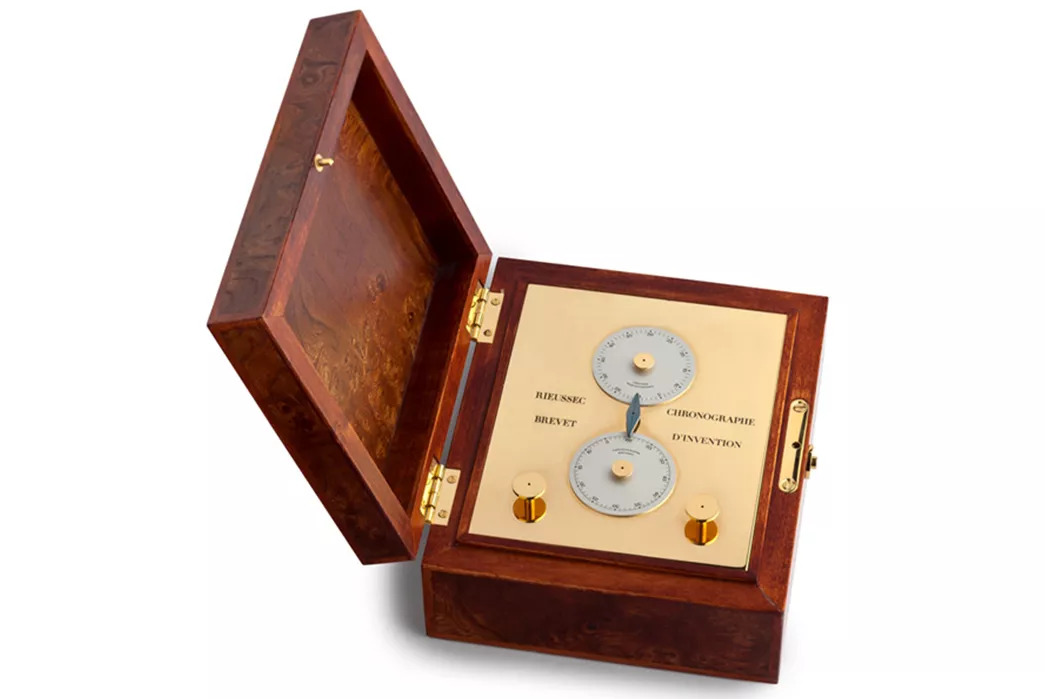
The word chronograph is derived from two greek words “chronos” which means time and the “graph” which means to write. The first chronograph was made by a French watchmaker, Louis Moinet in 1816, his chronograph measures time accurate to 1/60th of a second. Even though Moinet’s chronograph was made in 1816, it was not commercialized. The first commercial chronograph was made by Nicolas Mathieu Rieussec, a royal French watchmaker, in 1822 for King Louis XVIII. Nicolas’s chronograph is also called as the inking chronograph because of the ink required to use it. Currently, this inking chronograph is displayed in the Patek Philippe Museum in Geneva.
(The first chronograph made by Nicolas Mathieu Rieussec in 1822)
What is a chronograph?
A chronograph is a device to measure the time elapsed from the time it was started. You can take it as a stopwatch. A chronograph in a watch is a complicated thing to achieve. The watch chronographs are extremely accurate, so much so that some watches have split-second chronographs, double split chronographs, and triple split chronographs. Some chronograph timepieces measure a timelapse of 30 minutes and some measure for 12 hours, it changes from one watch to another. To make a chronograph is itself very difficult task, and making split-second and other versions of it, is a task for an expert.
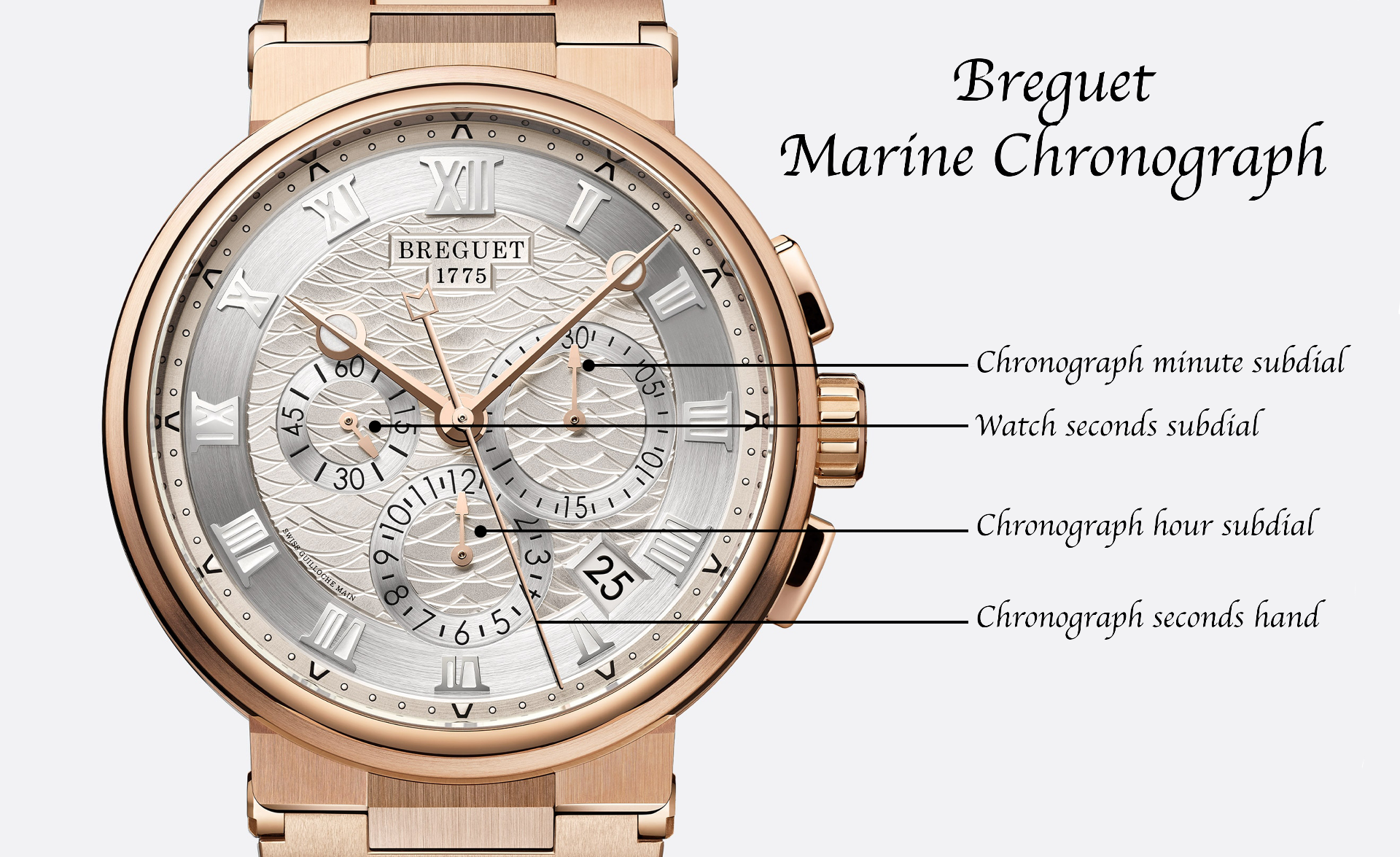
The chronograph in a watch has two pushers, one, to start and stop, and the other, to reset the function positioned at 2 and 4 o’clock respectively. The second's hand is used for tracking the elapsed seconds and split-seconds of the chronograph. The watches with chronograph complication have extra subdials, some have two subdials and some have three. In the watch with two subdials, there is a subdial for the watch seconds and the other subdial is for chronograph minutes, it varies between 30 minutes and 60 minutes. And in the watch with three subdials, the third subdial is to hold the hours of the timelapse of the chronograph.
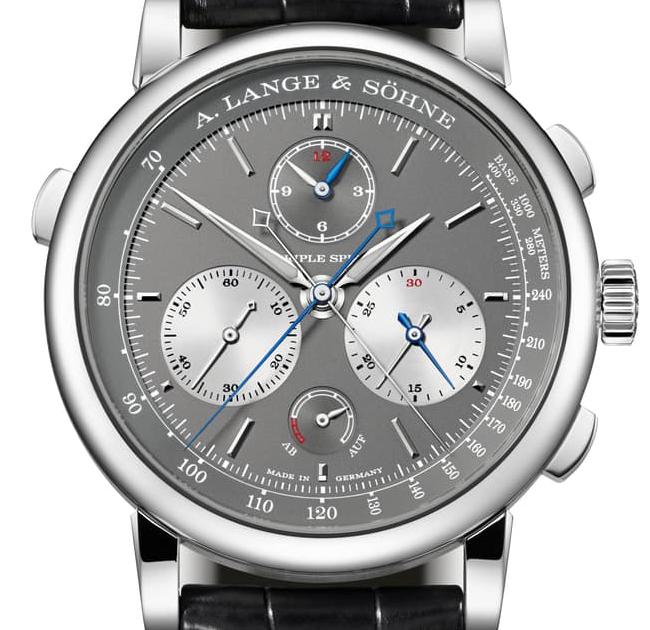
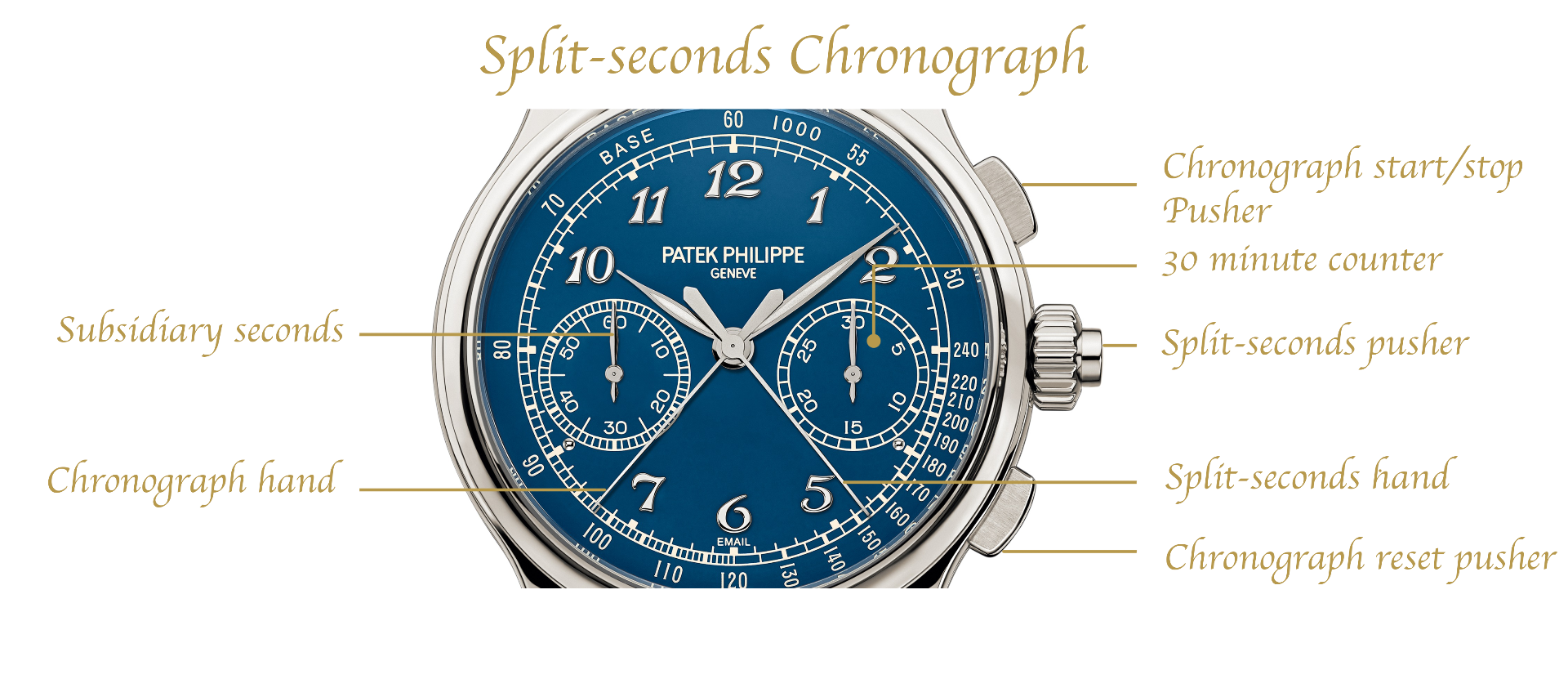
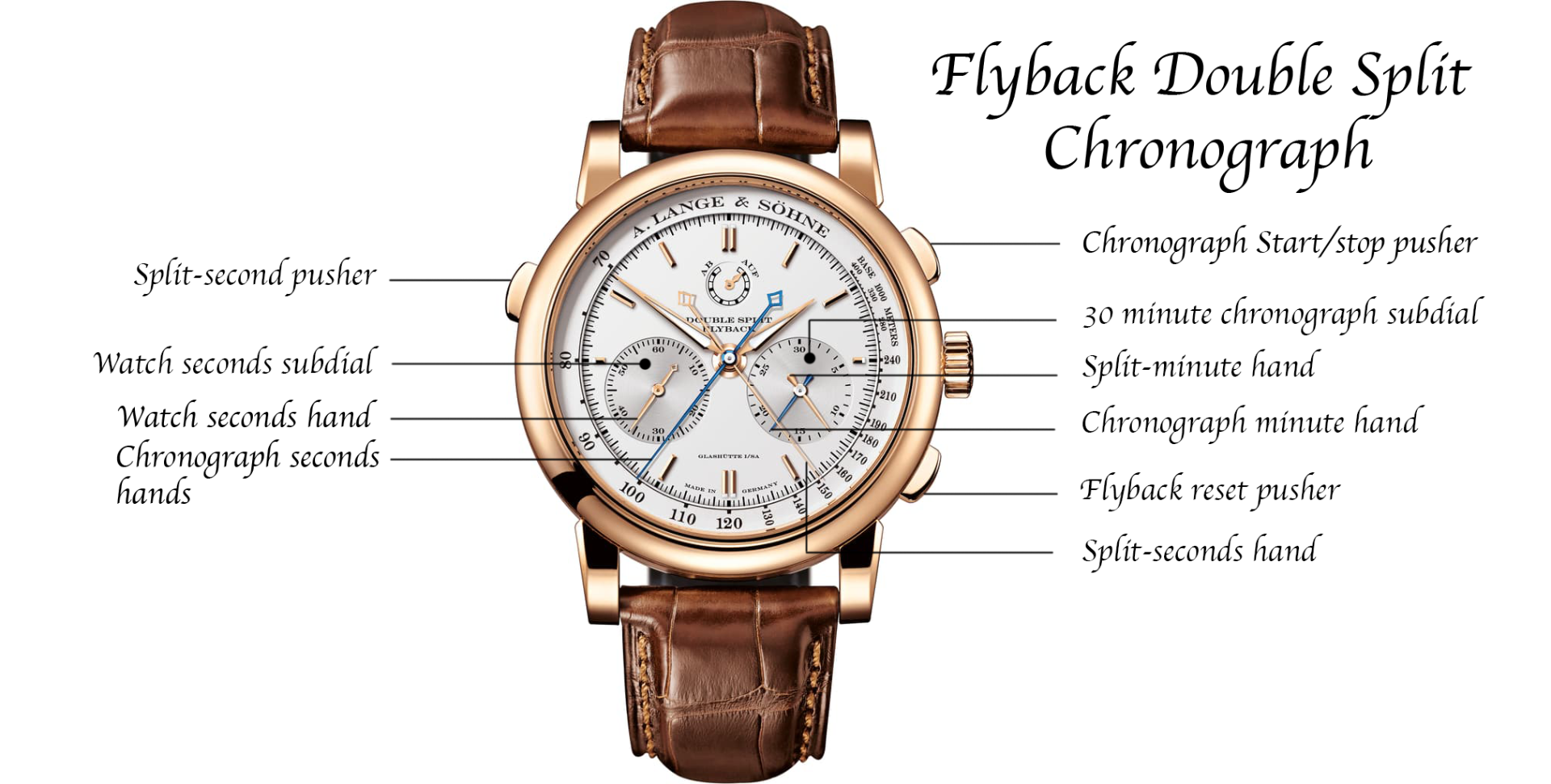
The level of complexity of a split-seconds chronograph is immensely high which can level upto a tourbillon. A Split Seconds Chronograph has two seconds hands and an additional pusher at 10 o’clock. When this pusher is pressed the split-seconds hand stops and the chronograph hand keeps going. When the split-second pusher is pressed again the split-second hand catches up with the chronograph hand. The start and stop pusher stops both of them. The split seconds Chronograph is famous with the name “Rattrapante”, it is used interchangeably all over the watch industry.
(A. Lange & Söhne Double Split Flyback Chronograph)
What is a Flyback Chronograph?
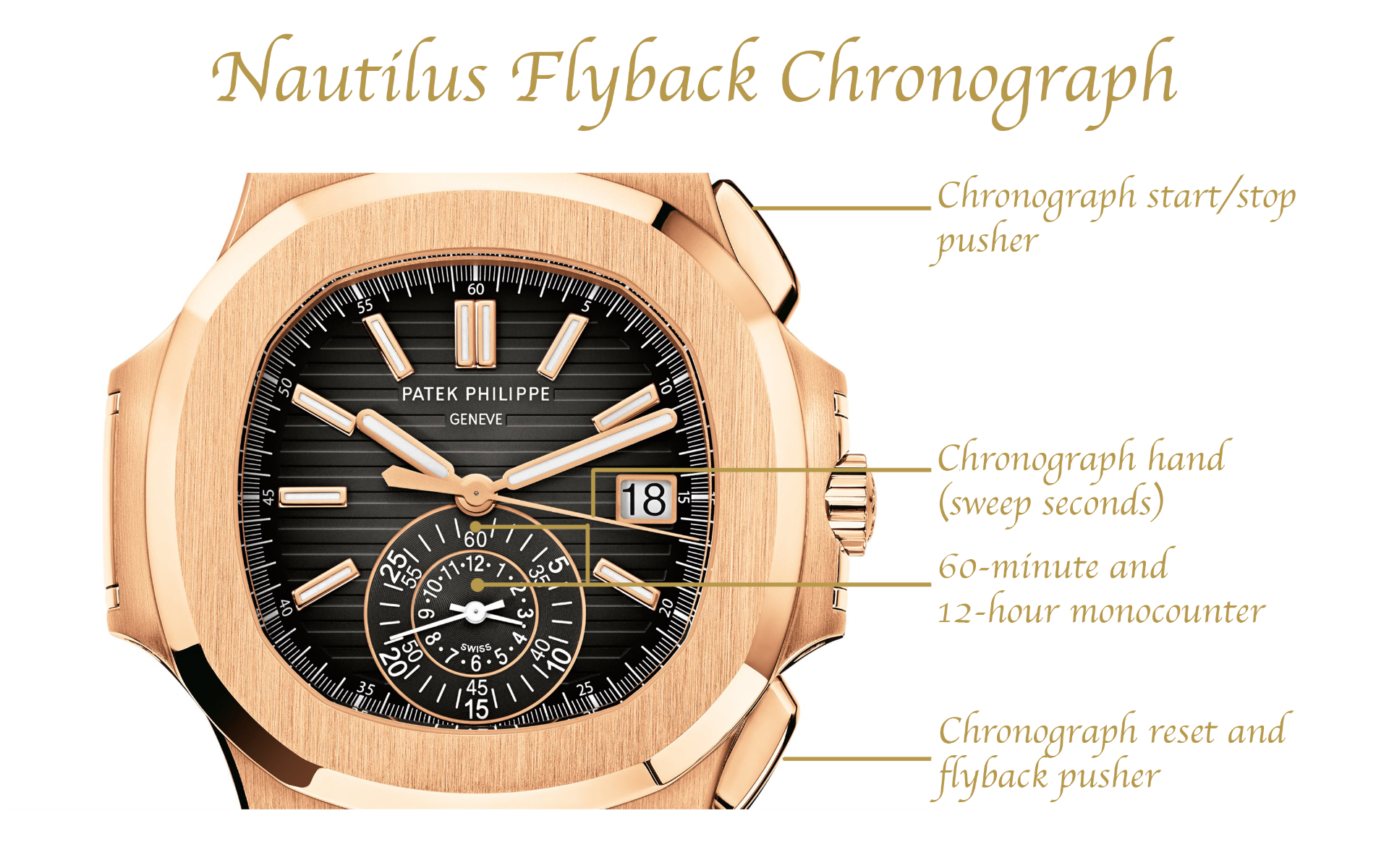
A flyback chronograph is a special version of a chronograph, as it has the capability to reset the chronograph without having to stop it. It reduces one press of the start-stop pusher when the chronograph is working and is needed to reset. Generally, the flyback functionality is controlled by the pusher present at 4 o’clock.
The chronograph complication is most common on the race tracks, apart from that it is also used in aviation, military operations, astronomy, sports, and many other fields. A chronograph is also used by divers to keep track of the time that they are underwater. It is used for many other time period-based calculations as well.
All in all, the chronograph complication was made by looking at the human need to measure the time of activity. The will to achieve accuracy in the time measurement has brought the chronograph complication to a point where the time between two seconds also matters.
September 26, 2022
|
Views: 1245
|
By: Namrata Kaku