
Guilloché Craftsmanship

Guilloché Craftsmanship

The decorations done on the dial of the watch are splendid and one of the techniques used in dial decorations is guilloché work. The guilloché work is an intricate decorative technique of straight, curved, or broken lines done in a repetitive pattern with a mechanical device. The machine used in creating these patterns is named a rose engine lathe or engine turning lathe. The guilloché work is both beautiful and functional.


The art of guilloché dates back the centuries,  to the time of ancient Greece. At that time, this art was done on soft materials like Ivory and wood. It was introduced in watch dials by Abraham-Louis Breguet in 1786. This revolutionized the dial decorations ideology and until now guilloche's work is considered a timeless classic. In the early 1900s, the dial decoration preference shifted from enamel to engine-turned. Still, enameling was used but guilloché leaded. 


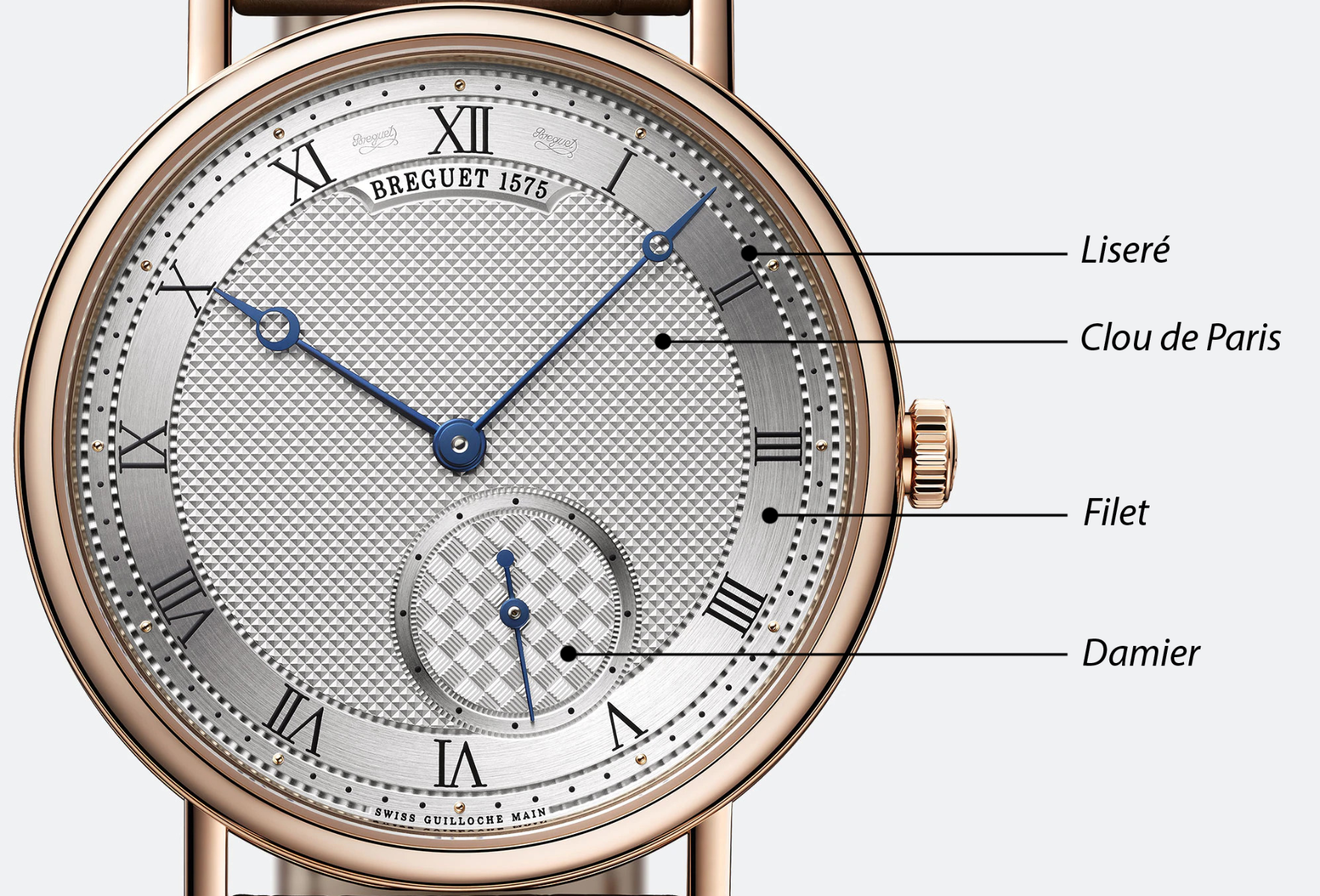
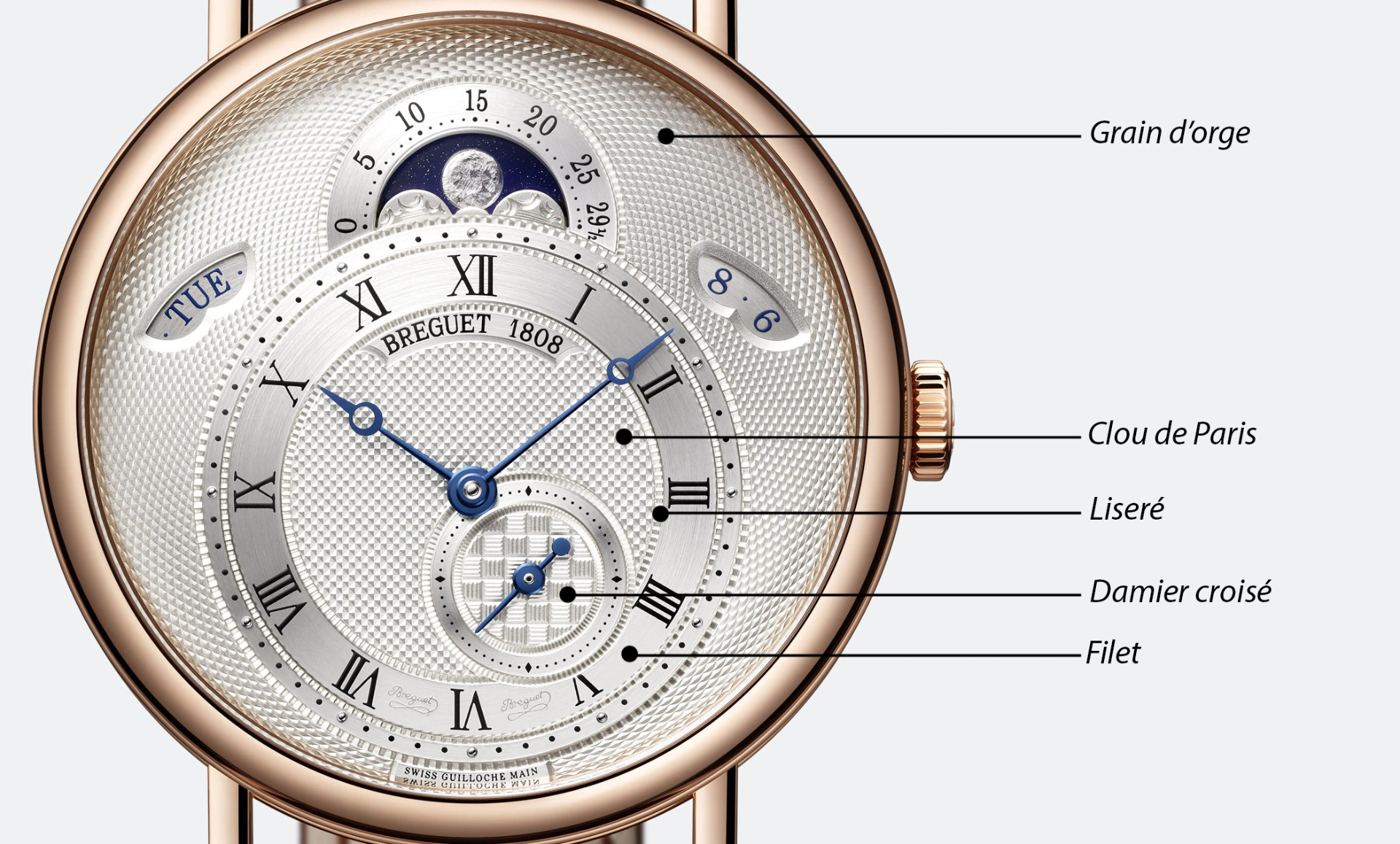
For centuries there have been different guilloché patterns being used as a form of decoration on timepieces. Some of them are illustrated in the following pictures:


The Bregeut Reference 7337BR/15/9VU

The Breguet Reference 7337BR/15/9VU, a variant of reference number 7337, is a self-winding watch with the day, the date, the phase, and the moon age display made in 18-carat gold. It is water resistant to 3 bar i.e. 30m with a Sapphire case-back. The dial has magnificent Guilloche work done on its dial.


The Breguet reference 7337BB/1E/9V6

The Breguet reference 7337BB/1E/9V6, a variant of reference number 7337, with a wide variety of guilloche work on its dial.

Guilloché Craftsmanship
The Breguet Reference 5707 is a self-winding alarm with an alarm power-reserve indicator, two time zones, and a date indicator. It is water resistant to 3 bar i.e. 30m. This watch is also called as “Le Réveil du Tsar”


The Breguet reference 7147

The Breguet reference 7147 is a self-winding watch with a seconds sub dial. The above image shows the engine-turned guilloche work done on the dial.