


Mechanical watches are those which work only by the mechanical energy produced by the winding of the crown. They do not have an electric supply. One can have different kinds of watches: wristwatches, table clocks, pocket watches, and wall clocks. They have their separate components according to their sizes, but the main components and their functions remain the same. Let’s have a look at the significant components that are present in the watch and what are their functions. Some of the major components are

Diagram showing parts of a mechanical watch
Mainspring
The mainspring of a watch is a tightly coiled piece of thin metal strip that provides the energy to power the watch. The mainspring is wound up by the winding of the crown and then slowly unwinds over time, providing a consistent and reliable source of energy. Mainsprings are usually made of steel, but can also be made of other materials such as brass. The choice of material is usually determined by the type of watch being made and the desired properties of the mainspring.

(The mainspring of a wristwatch)
Mainspring barrel
The mainspring barrel, also known as the going barrel, is a cylindrical box containing the mainspring of the watch. As the mainspring barrel is the container of the mainspring, it is also called the powerhouse of the watch. The mainspring barrel drives the movement of the hands on the clock or watches face, and it is essential for keeping time.

(Mainspring barrel of a mechanical wristwatch)
Balance Spring
Balance Spring is also called hairspring. It is made up of an ultra-thin (could sometimes be a tenth of a millimeter), coiled wire of metal. It is attached to the center of the balance wheel and maintains constant tension on it. This ensures that the balance wheel oscillates at a steady rate, which in turn keeps the watch accurate.

(Balance spring of a mechanical wristwatch)
Balance wheel
The balance wheel is a small, weighted wheel that oscillates back and forth at a constant rate. It is connected to the watch's gears and springs, which transfer energy to the balance wheel to keep it moving. The balance wheel's oscillations help to regulate the watch's movement and keep time. This component is responsible for controlling the power supplied by the mainspring barrel
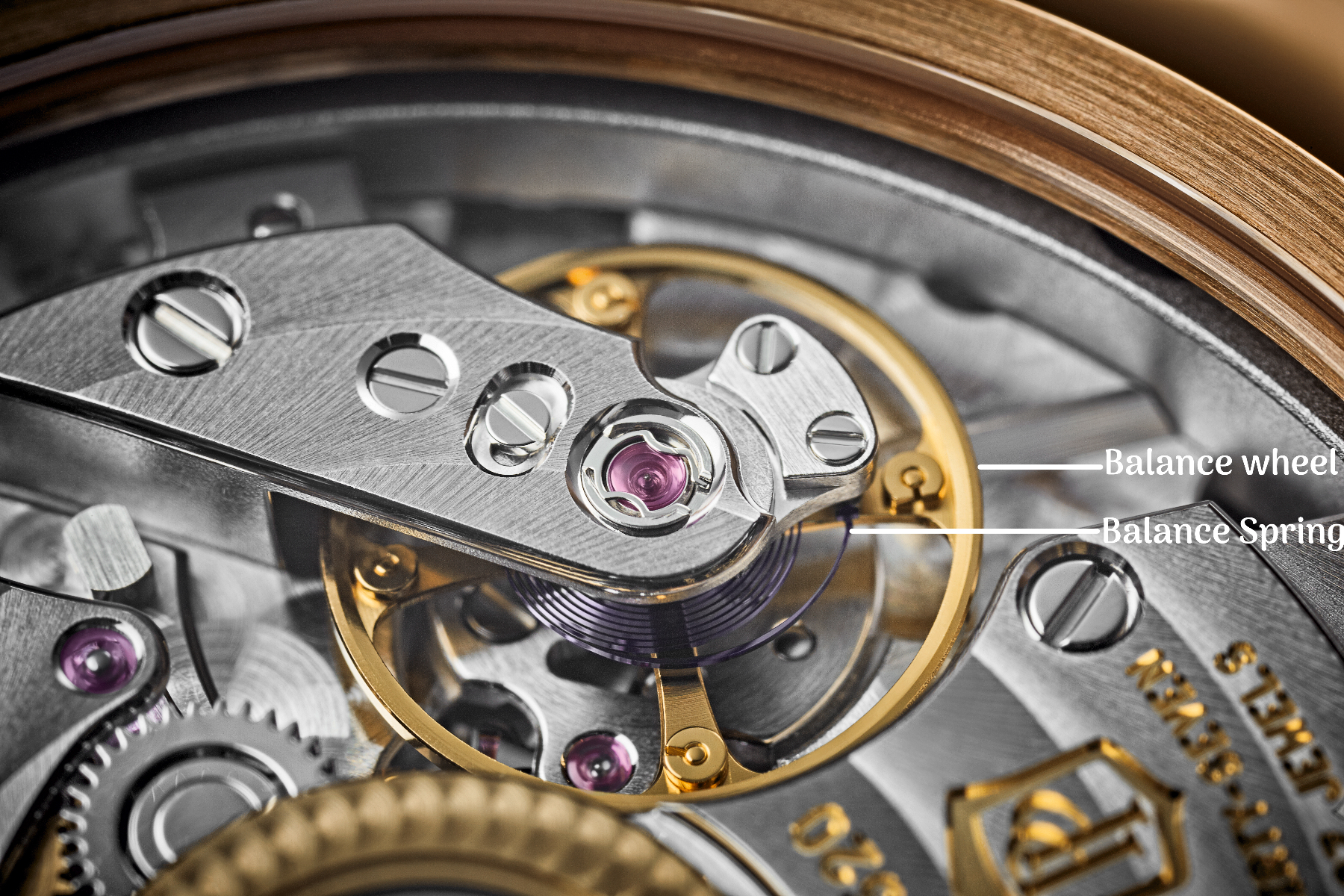
(Balance wheel of a mechanical wristwatch)
Pallet fork
This component is present between the balance wheel and the escape wheel. It is a part of escapement i.e. the locks and escapes movement of the escape wheel releasing one tooth at a time. It gives small pushes to the balance wheel for its constant oscillations. The lock and escape movement of the escape wheel tooth is done by the pallet jewels
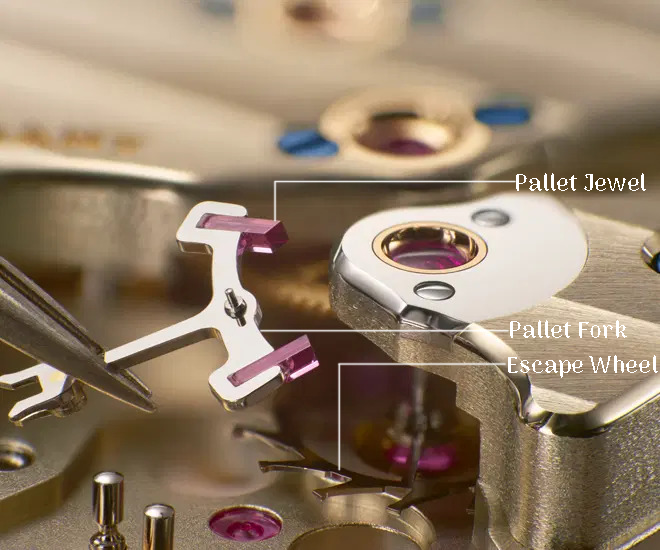
(Pallet fork of a mechanical wristwatch)
Escape wheel
The escape wheel is a component that helps in making an impulse for timekeeping. It has elongated teeth and it is connected to the mainspring. The winding force from the mainspring makes the escape wheel turn and the pallet fork connected to it keeps a check on its movement. The escape wheel moves the pallet fork to and fro making it move like a pendulum.
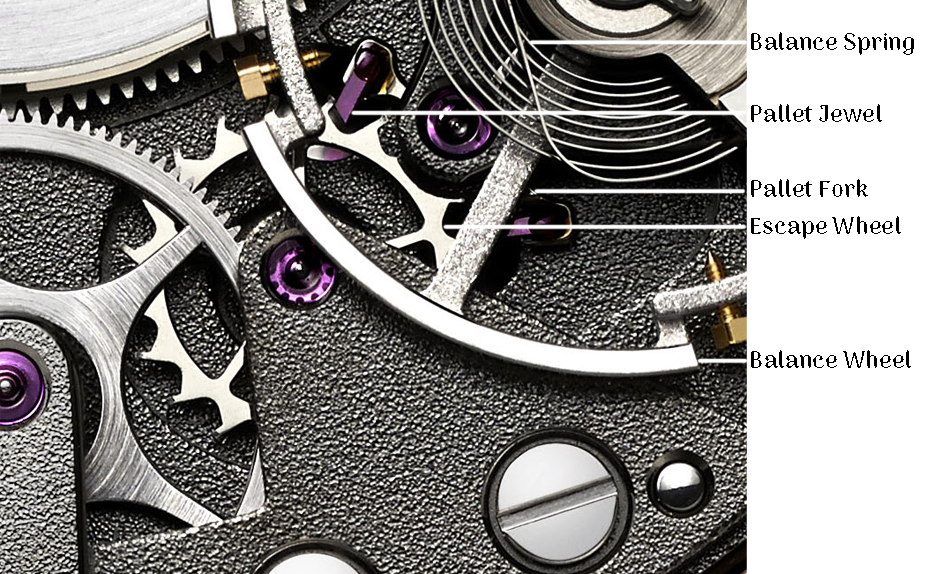
(Escape wheel and pallet fork of a mechanical wristwatch)
Gear Train
The gear train is a series of wheels attached to the main spring barrel. There are two main functions it performs. First, it helps in controlling the force exerted by the mainspring, and second, it helps in dividing the impulses into seconds, minutes, and hours.
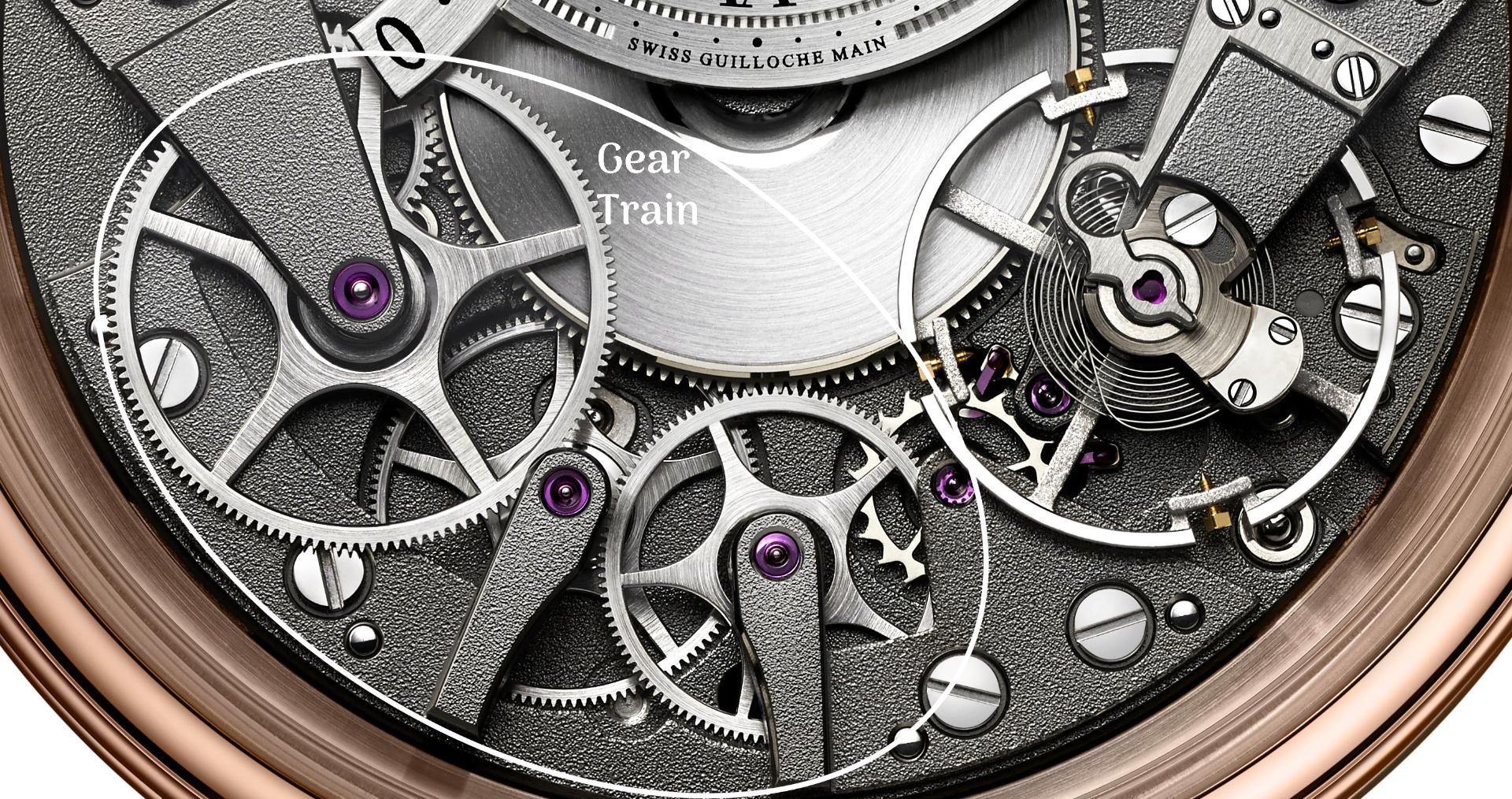
(Gear train of a mechanical wristwatch)
Conclusion
Components, even though they have different sizes for different types of timekeeping devices, the main components remain the same.